The Things We Do Because They Matter
On ritual, meaning, and our need to mark the moments of our lives
This article is featured on Substack, Medium, and my Hellbloom Haven Blog
I’ve been planning my first in-person event for Hellbloom Haven, which means I’ve spent a ridiculous amount of time thinking about what I want people to experience when they walk into that room. I’d like it to be more than a lecture where I stand at the front and talk while everyone listens. I want people to participate; I want there to be moments of reflection, connection, creativity, and intention. I’ve thought deeply about incorporating a release ritual, something that allows people to physically acknowledge what they’re ready to let go of, along with an activity centered around growth and what they want to carry forward.
Somewhere in the middle of planning all of this, though, a little voice crept in. Are people going to think this is too witchy? Which made me laugh a little because there are certainly parts of me that could probably be described that way. I have a deep faith and my own set of beliefs about God, spirituality, energy, intention, and the ways we connect with something greater than ourselves. Those beliefs are deeply personal to me, but I also understand that everyone else walks into the room carrying their own beliefs, traditions, experiences, and ways of making sense of the world. I respect that. The last thing I would ever want is for someone to feel like I had tricked them into participating in something they weren’t comfortable with or that I was trying to push my beliefs or spiritual practices onto them.
When I really think about it,s a little ridiculous, and I recognize that. Nobody is being lured into a mysterious room under false pretenses, obviously. They’ll know what the event is. They’ll have read about it, and they’ll have voluntarily signed themselves up and presumably will have some idea what Hellbloom Haven is before they arrive. That’s overthinking for you, I suppose, taking something rooted in care and respect and turning it into a hundred imaginary ways you might accidentally get it wrong.
Still, the worry made me stop and really think about why the word ritual felt like something I needed to explain or defend in the first place. Ritual isn’t inherently witchy. It isn’t inherently Christian, Buddhist, Pagan, Hindu, spiritual, or secular either. Ritual belongs to humanity.
Across cultures, religions, countries, generations, and communities, human beings have found ways to mark the things that matter to us. We pray, sing, light candles, gather around tables, exchange rings, bury our dead, celebrate births, wash, fast, feast, dance, kneel, meditate, tell stories, decorate our homes, blow out birthday candles, and make wishes. Even people who would never describe themselves as spiritual often have rituals without realizing it.
That realization is what led me to write this article and reflect on a few bigger questions: Why are rituals so important to us, and if they are such a natural part of being human, why has the word ritual become so taboo? Why, across so many different versions of being human, do we keep creating intentional acts to mark beginnings and endings, grief and celebration, change and connection, yet sometimes become uncomfortable the moment those acts are actually called rituals?
When we hear the word ritual, I think many of us picture something very specific. Maybe candles arranged in a circle, chanting, incense, ceremonial clothing, or some ancient spiritual practice we don’t completely understand. For others, ritual immediately brings religion to mind: communion, baptism, prayer, fasting, or gathering for worship. Depending on our experiences, the word can feel sacred, mysterious, uncomfortable, or even a little frightening.
But ritual is much more ordinary than that.
Think about how many things we do simply because a moment matters. We put candles on a birthday cake, sing the same song we’ve been singing since childhood, make a wish, and blow them out. There is absolutely nothing necessary about any of that. The cake would taste exactly the same without candles, yet somehow, without them, something would feel like it’s missing.
We have rituals for marriage, birth, death, graduation, retirement, holidays, changing seasons, and countless other transitions. We exchange rings. Toss graduation caps. Carry flowers. Decorate Christmas trees. Gather around Thanksgiving tables. Leave flowers at graves. Throw baby showers before children are born and gather together after someone dies. Different families, cultures, religions, and communities may do these things differently, but the desire underneath them is remarkably similar. Something important is happening, and simply allowing the moment to pass without acknowledging it doesn’t always feel like enough.
Then there are the rituals so woven into our everyday lives that we rarely recognize them as rituals at all. Maybe you drink your coffee from the same mug every morning while the house is still quiet. Maybe you kiss your partner before leaving for work, tuck your child into bed the same way every night, say a prayer before eating, call someone every Sunday, play a certain song before something difficult, or visit the same place when you need to clear your head.
Some of these things are routines, certainly. But sometimes a routine carries something more. There is comfort in it, meaning, connection, and intention. We aren’t simply repeating an action because it feels like something we have to complete. I recognize, of course, that this isn’t true for everyone. For people living with OCD or other experiences where repeated actions can feel compulsory rather than chosen, that distinction matters, and that isn’t the kind of ritual I’m referring to here.
Perhaps that is one of the simplest ways to understand ritual. A routine helps us move through life. A ritual helps us experience it.
Human beings have been finding ways to mark meaningful moments for thousands of years, often without consciously recognizing those acts as rituals. Traditions are created, gestures are repeated, people gather, stories are remembered, milestones celebrated, and losses are mourned. Ordinary actions become symbolic because some emotions, transitions, and experiences simply feel too significant to remain quietly tucked away inside. We want to give it somewhere to go.
Maybe ritual is simply one of the ways we make the invisible parts of being human visible.
Ritual Gives Us Something to Hold Onto
Life contains a deeply uncomfortable amount of uncertainty. We don’t get to control when someone we love dies, whether a relationship lasts, when we lose a job, how quickly life changes, what tomorrow brings, or whether the thing we desperately hope for will actually happen. Even the good changes can leave us standing somewhere between what was and what comes next, trying to figure out who we are in this new version of our lives.
Ritual gives us something tangible to do with experiences that aren’t tangible at all.
Think about grief. There is nothing anyone can physically do to undo the loss of someone they love or bring that person back. Yet people gather for funerals and memorials, tell stories, bring flowers, prepare food for grieving families, visit graves, light candles, keep photographs, acknowledge birthdays after someone is gone, and continue traditions that once included them. None of these things change the reality of death, but they give grief somewhere to exist beyond the confines of the heart and mind. They create a physical expression for something that can otherwise feel far too enormous to hold.
Joy has its rituals, too. When something wonderful happens, simply acknowledging it and moving on rarely feels like enough. There are hugs and toasts, photographs and gatherings, cakes and announcements. Pregnancies are shared, baby showers are had, graduations celebrated, retirements honored, and milestones turned into memories. In a hundred different ways, joy creates the same desire to pause and say, This happened. This mattered. I want to remember how this felt.
Ritual can also bring structure to periods of uncertainty and change. When so much feels outside of our control, choosing one intentional action can create a small sense of steadiness. Lighting a candle won’t solve the problem. Writing something down and releasing it won’t erase what happened. Planting a seed won’t magically transform a life. The power isn’t necessarily in the object or the action itself, but in what that action allows someone to acknowledge: I am grieving this. I am grateful for this. I am ready to release this. I want to remember this. I am choosing something different.
There is something so beautiful and powerful about taking an experience that exists internally and giving it a physical expression. Sometimes the mind understands that something has changed long before the heart, body, or emotions have fully caught up. Ritual can create a bridge between intellectually knowing that something has ended, begun, or changed and allowing ourselves to actually experience what that change means. It gives something that may feel abstract, overwhelming, or difficult to name a moment in which it can be seen, acknowledged, and honored.
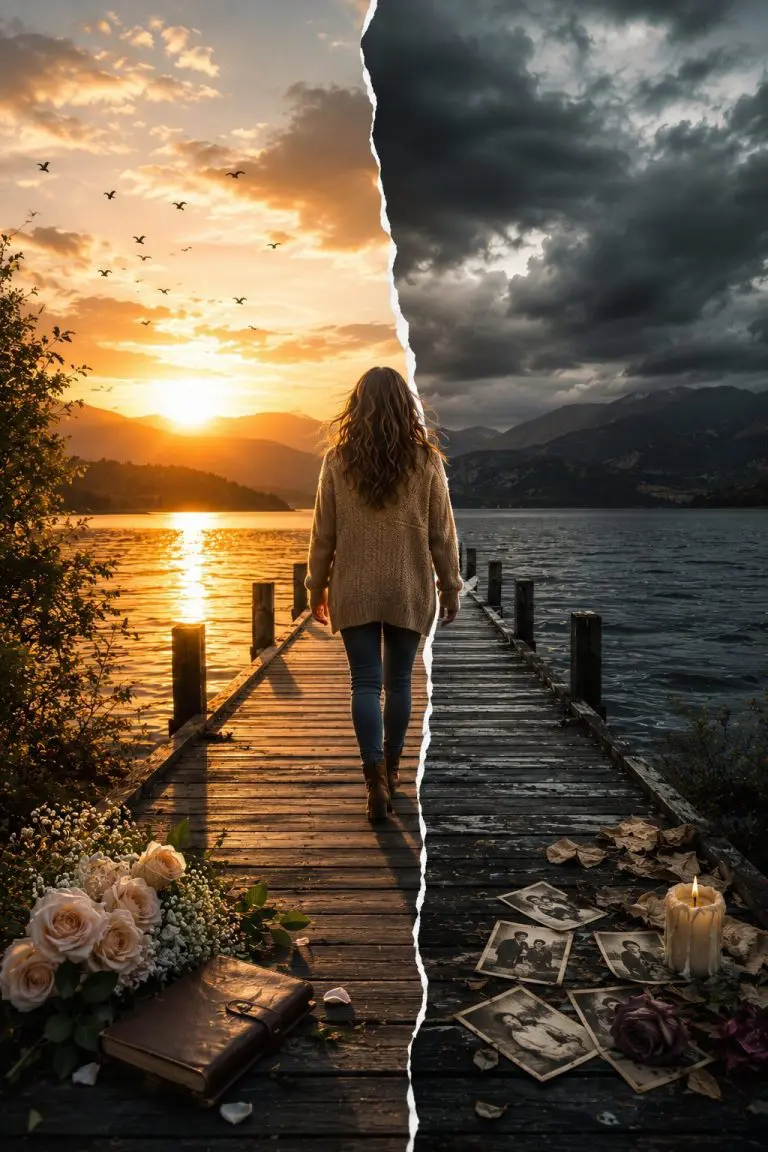
Perhaps that is why rituals appear so often around transitions. They create a threshold between before and after. There was life before the wedding and life after it. Before the baby and after. Before the loss and after. Before the decision and after. Before we decided to let something go and whatever comes next.
The ritual doesn’t create the change. It just gives us a moment to recognize that the change is already happening.
Maybe that is part of why rituals have survived across generations and cultures. The details change, the symbols change, and the beliefs surrounding them may be completely different, but the instinct remains. In moments too important to treat like any other day, people have continually found ways to pause and mark the difference. Ritual creates that pause. It says, in whatever language, tradition, or form it takes: Pay attention. Something here matters.
So Why Does the Word “Ritual” Feel So Strange?
If ritual is already woven into so much of our lives, why did I hesitate to use the word when planning my event? Why did part of me tense up and immediately wonder whether someone might hear release ritual and think I was about to pull out a cauldron?
I think part of it comes from the associations we have built around the word itself. Depending on how and where you were raised, ritual may have been a perfectly ordinary word. For some people, rituals are an important part of religious life. Prayer, communion, baptism, fasting, lighting candles, reciting particular words, observing holy days, or gathering in worship can all contain elements of ritual. These practices aren’t strange or sinister to the people participating in them. They are expressions of faith, remembrance, devotion, community, and connection.
In other spaces, though, the word ritual has become closely associated with witchcraft, the occult, magic, or practices outside of mainstream religion. Movies and television certainly haven’t helped. Say “family tradition” and most of us picture something warm and sentimental. Say “family ritual” and suddenly it sounds like we might need to ask a few more questions.
For me, that discomfort isn’t entirely imagined. I have lost friends and even family relationships because of my beliefs and spiritual practices. I know what it feels like to have something meaningful to me misunderstood, judged, or reduced to a label that doesn’t actually represent the whole of what I believe. I have a deep faith in God while also believing in things and participating in practices that may not fit neatly inside someone else’s definition of faith. Those experiences have made me much more aware of how quickly certain words, symbols, and practices can create assumptions about a person.
Maybe that is part of why I overthink something as simple as calling an activity a ritual. I know what it feels like to have someone decide what I believe before ever asking me. I also never want to do the reverse to someone else. I don’t want another person to feel as though their faith, spirituality, lack of spirituality, or personal beliefs aren’t welcome simply because they interpret an experience differently than I do.
Yet the more I think about it, the more I realize that the action itself doesn’t necessarily tell us what something means. Lighting a candle can be prayer, remembrance, meditation, celebration, spellwork, or simply a way to make the room smell like cinnamon. Burning a piece of paper can symbolize releasing something we no longer want to carry, or it can just be a piece of paper on fire. Planting a seed can represent growth and new beginnings, or it can mean you would like a tomato in July.
I believe the meaning comes from the person doing it, the intention behind it, and the beliefs they bring to it.
I think that distinction matters because respecting different beliefs does not require stripping every meaningful practice of symbolism. It means allowing people to decide what that symbolism means for themselves.
One person might participate in a release exercise and quietly pray to God. Someone else might think about energy, the universe, or their ancestors. Another person may believe in none of those things and simply appreciate having a physical way to acknowledge something they are ready to leave behind. They can perform the same action without having the same explanation for what is happening.
Perhaps we have become so concerned with deciding which rituals belong to which belief systems that we sometimes forget how much these practices overlap. Across cultures and faiths, humans light candles, use water, gather around food, sing, pray, meditate, fast, plant, burn, bury, celebrate, mourn, and tell stories. The meanings are not interchangeable, and the traditions deserve to be understood within their own contexts, but the human impulse to create meaning through intentional action appears again and again.
That brings me back to the little worry I had while planning my event. I recognize I don’t need everyone in the room to believe what I believe for us to share a meaningful experience. I don’t need to tell someone what releasing something is supposed to mean to them. In fact, perhaps one of the most respectful things I can do is create the space without deciding what that space has to mean for everyone who enters it.
What they bring into that moment, what they call it, what they believe about it, and what they carry away from it belongs to them. Perhaps that is what ritual can do so beautifully. It can give us a container for meaning without requiring every person to fill it with exactly the same thing.
Where Energy, Psychology, and Intention Meet
This is where my own beliefs enter the conversation a little more deeply, because I believe in energy work. I believe we carry things with us. I believe intention matters, that energy can shift, and that there are parts of our connection to ourselves, each other, nature, God, and whatever exists beyond what we can physically see that we may never be able to completely explain. I also believe in psychology, and I don’t think I have to choose between the two.
There are psychological reasons a ritual can feel powerful without anything supernatural happening at all. When something exists only in our thoughts, it can become incredibly difficult to separate ourselves from it. We can think the same thought, replay the same memory, carry the same regret, or tell ourselves the same story hundreds of times. Giving that internal experience a physical expression changes how we interact with it.
Writing something down requires us to name it. Holding that piece of paper allows us to see it outside of ourselves. Choosing to tear it, burn it, bury it, or otherwise release it creates a physical action connected to an internal decision. It doesn’t erase a memory or magically remove an emotion, but it can create a meaningful marker: I have acknowledged this. I know what I have been carrying. I am choosing what I want to do with it now.
There is something incredibly powerful about choice being part of that process. So many of the experiences we eventually need to heal from involve moments when we didn’t have that control. Something happened to us. Someone left. Someone died. A relationship ended. Our bodies changed. A plan fell apart. We got sick. We learned something we didn’t want to know. Life moved forward before we were ready for it. A ritual can’t give us control over what happened, but it can give us ownership over how we choose to meet it now and move forward from it.
From the perspective of energy work, I see another layer happening at the same time. When I intentionally release something, I am not pretending it never happened or demanding that the universe magically remove it from me. I am changing my relationship with the energy I have continued giving it. From the perspective of energy work, I see another layer happening at the same time. When I intentionally release something, I am not pretending it never happened or expecting the universe to magically remove it from me. I am changing my relationship with the energy I continue giving it.
To me, releasing also means learning to recognize what belongs to me and what doesn’t. Not every comment needs to become a wound. Not every rejection has to become proof that something is wrong with me. Someone else’s anger does not automatically have to become mine to carry, and another person’s opinion of me does not have to become the way I see myself. It means learning to pause long enough to respond instead of immediately react, to question the stories I tell myself about what something means, and to recognize when an old hurt is influencing a present moment.
That doesn’t mean becoming unaffected by life or pretending things don’t hurt. It means becoming more intentional about what gets absorbed, what gets carried forward, and what deserves my energy. Some things need to be felt. Some need to be grieved. Some require accountability, boundaries, or change. Others can simply be recognized for what they are without being taken personally or turned into something I carry long after the moment has passed.
For me, that is part of what release really means. The past remains part of the story, but it doesn’t have to write every chapter that comes after it. There is space between what happens and what happens next, and within that space is the ability to choose: Does this belong to me? What can I learn from it? What needs my attention? What am I ready to stop carrying? How do I want to respond?
That choice is where I believe psychology, energy work, and personal growth can meet. Whatever language someone uses to describe it, there is something powerful about realizing that not everything that reaches us has to remain with us.
Someone else might describe that exact experience very differently. They might call it emotional processing, nervous-system regulation, symbolic closure, mindfulness, prayer, surrender, acceptance, or simply making a decision and physically representing it. I think all of those possibilities can exist beside one another. In fact, I think that is part of what makes ritual so beautiful.
The power doesn’t have to belong to the candle, the paper, the fire, the seed, the crystal, the prayer, or whatever object or action is being used. Those things can become symbols and tools, but the person participating is the one deciding what the moment represents. If I write something on a piece of paper and burn it, the fire isn’t reaching backward through time and changing what happened to me. It isn’t forcing me to forgive someone, and it isn’t deciding that I am healed. I am the one deciding what I am ready to acknowledge and what I want the act of releasing that paper to represent.
For me, there may also be prayer, energy, God, Spirit, or something sacred within that moment. For someone else, there may be none of those things, and neither experience has to take something away from the other. Perhaps the psychological and spiritual explanations do not always need to compete for ownership of an experience. We can understand some of what happens inside the human mind and body while still leaving room for mystery, faith, energy, and the things each of us personally believes.
Ultimately, the meaning remains with the person participating. You decide what you are releasing and what you are welcoming. You decide whether the moment represents God, energy, psychology, intention, symbolism, or some beautiful combination of them all. Maybe that ownership is part of what makes ritual so powerful in the first place.
The Things We Choose to Carry Forward
After my divorce, I spent a lot of time sitting with myself and figuring out who I was when I was no longer trying to be who everyone else needed me to be. One of the hardest things I had to accept was that not everyone who had been part of my life could come forward with this version of me.
For a long time, I was really good at wearing masks. I could make myself smaller, quieter, easier to understand, easier to accept. I could hide pieces of myself if I thought those pieces might make someone uncomfortable. I could adjust who I was depending on the room I was standing in because keeping people around often felt more important than being completely honest about who I was.
I can’t do that anymore.
I love myself too much now. I respect myself too much. I have paid too much, lost too much, survived too much, and sacrificed too much becoming the person I am today to continually invite energy into my life that requires me to abandon pieces of myself in order to keep it there.
That doesn’t mean I never struggle with it. Clearly, I just wrote an entire article because I was worried someone might think an activity at my event was too witchy. Those old fears still show up. I still question myself. I still wonder how I will be perceived, whether I am too much, whether I should explain myself differently, soften something, or make what I believe a little easier for someone else to understand.
I’m simply better at catching myself now.
I am much better at remembering that I’ve already lived through things I once thought would destroy me. I have experienced beautiful things and devastating things, beginnings I prayed for and endings I never wanted. Somehow, I am still here. Life will continue bringing both the good and the bad, because that is what life does. I don’t need to know exactly what is coming to trust myself to meet it when it arrives.
Maybe that’s also why ritual has become so meaningful to me. It gives me a way to stop long enough to recognize those precious moments instead of constantly rushing toward whatever comes next. Sometimes I need to acknowledge what hurt. Sometimes I need to grieve what I lost, I need to recognize how far I have come. Sometimes I need to intentionally put something down. Other times I need to plant something, literally or figuratively, and decide that this is what I want to nurture next.
So after thinking about all of this, I think I’m going to keep the word ritual.
At my event, I want to create opportunities for people to reflect, release, create, and decide what they want to carry forward. I don’t need those moments to mean the same thing to everyone in the room. Someone may experience them through their faith. Someone may think about energy. Someone may see them entirely through the lens of psychology. Someone might simply enjoy getting their hands in the dirt and planting something that reminds them of a promise they made to themselves.
That meaning belongs to them.
We don’t need permission to create meaningful moments in our own lives. Light the candle. Say the prayer. Take the walk. Write the letter. Plant the seed. Sit beneath the tree. Make the meal your grandmother used to make. Celebrate the thing nobody else realizes was incredibly hard for you. Grieve what you need to grieve. Release what you are ready to release, and hold onto what still deserves to be held.
Thank you so much for taking the time to read and share a little space with me today. Wherever you are and whatever you are carrying, I hope you find at least one small moment today that feels meaningful to you. I hope you have a beautiful day, lovely souls.
Hellbloom Haven is a space I created for reflection, healing, self-discovery, spirituality, creativity, and the beautifully complicated experience of being human. You’ll find articles, poetry, daily tools, trauma education, peer support, intuitive offerings, and other resources created to help you reconnect with yourself in whatever way feels right for you.
You can explore more at www.hellbloomhaven.com,
From the ashes, we rise.