What the Mainstream Healing Community Often Misses About Abuse Recovery
Why healing requires more than boundaries, self-awareness, and recognizing red flags.
This article is also featured on Substack
What the Mainstream Healing Community Often Misses About Abuse Recovery
We’ve all seen the pattern before in movies, maybe in our parents, in our families, in a friend’s relationship, or maybe even in our own.
Sometimes it looks like the intensely charming partner who feels magnetic and emotionally consuming in a way that is almost intoxicating. Other times it looks quieter, a parent whose moods everyone learns to manage, a friendship built around guilt and emotional instability, a relationship where love slowly becomes tangled with anxiety, self-abandonment, confusion, or the constant need to keep the peace.
Then, slowly, almost unnoticeably at first, something changes.
Small criticisms become normal, and boundaries start eroding. The relationship becomes emotionally confusing, and there’s more anxiety and self-doubt, more walking on eggshells. Isolation can often happen so gradually that the person inside the relationship often doesn’t even fully see it happening in real time.
Small criticisms become normal, and boundaries start eroding. The relationship becomes emotionally confusing. There’s more anxiety and self-doubt. There is more walking on eggshells, and isolation happens gradually enough that the person inside the relationship often doesn’t fully see it happening in real time.
Despite how common these dynamics are for so many, many of us still think about abusive relationships in very overly simplistic ways, as though abusive people are all consciously calculating manipulators following some secret psychological playbook.
What becomes difficult to ignore after enough lived experience or observation is this: these patterns are often startlingly similar across entirely different people and relationships.
Why?
How do so many unhealthy relationship dynamics end up following the same emotional architecture, idealization, attachment, instability, control, intermittent affection, confusion, dependency, even when the people involved are completely different?
Why do so many people, even after recognizing these patterns intellectually, still find themselves emotionally and physically pulled back toward similar relationships, similar emotional environments, or the same kinds of relational pain over and over again?
Why do some people repeatedly recreate control, instability, emotional withdrawal, or chaos in relationships, while others repeatedly find themselves adapting to it, tolerating it, trying to fix it, or feeling deeply attached to it even when they know it is hurting them?
I think part of the answer is that mainstream conversations about healing often focus heavily on cognitive insight, boundaries, self-worth, attachment styles, and recognizing red flags. Those are absolutely part of the process too, but it’s important to also recognize that many people can understand these concepts intellectually, yet still react emotionally in the same ways they did before.
Healing isn’t just about learning new behaviors; it’s also about understanding and addressing the deeper patterns underneath them.
The body learns relationships, too. It learns what love feels like, what conflict feels like, what safety feels like, and over time, it begins responding to those patterns automatically. Healing is not just about changing what you think. It’s about changing what your nervous system has learned to associate with love, safety, intimacy, and connection.
Section 1: The Pattern Almost Everyone Recognizes
One of the strangest things about abusive relationships is how familiar the pattern feels once you begin recognizing it. The details may differ from relationship to relationship and person to person, but the emotional structure is often surprisingly similar. There’s usually an intensely compelling beginning. A feeling of closeness that develops quickly. Deep attention and emotional intensity. There is a sense that you’ve finally found someone who truly sees you.
In romantic relationships, the connection can often feel intoxicating at first. Not simply because the person is charming, but because they often make you feel uniquely understood, valued, or chosen. Many people describe these relationships as feeling unusually deep very early on. There is often a heightened sense of emotional intimacy, constant communication, accelerated closeness, or the feeling that the relationship is somehow different from anything that came before it, and then, gradually, something shifts.
Or at least, that is how it happens for many people and how it has happened in my life.
For others, the shift is much faster. Sometimes the volatility, control, emotional instability, or cruelty appears early enough that part of you immediately recognizes something is wrong. But even then, the relationship can still become psychologically confusing because harmful behavior is often mixed with genuine tenderness, vulnerability, affection, or emotional intensity. The contradiction itself becomes disorienting.
A person can hurt you deeply and still seem or be sincere when they apologize. They can make you feel unsafe and still make you feel wanted. They can create emotional chaos while also seeming wounded, loving, emotionally dependent, or terrified of losing you. This is part of what makes abusive dynamics so difficult to reduce to simple categories of “good person” or “bad person.” Human beings are just rarely psychologically neat enough for that.
Over time, many abusive relationships begin revolving less around connection and more around emotional management. The other person’s moods become increasingly important. You begin monitoring yourself more carefully. You explain yourself more often. You feel more anxious, more uncertain, more responsible for maintaining stability within the relationship.
This is where many conversations about abuse become overly simplistic. People often imagine abusive individuals as consciously constructing elaborate systems of manipulation from the very beginning. Certainly, some people are highly deliberate and calculated in their behavior. But many harmful relationship patterns emerge less from conscious strategy and more from unresolved attachment wounds, emotional dysregulation, learned relational behaviors, fear of abandonment, shame, control mechanisms, and deeply ingrained nervous-system responses.
That absolutely doesn’t make the harm less real. But it does help explain why these patterns repeat so consistently across different people and relationships.
We as human beings share the same core attachment systems, the same fears of rejection, abandonment, inadequacy, loss, and disconnection. Underneath the surface, many abusive dynamics are built from predictable psychological mechanisms interacting with equally predictable human weaknesses.
This is why so many people eventually arrive at the same unsettling realization. Whether the change happened slowly or all at once, the nervous system adapted to surviving the relationship long before the conscious mind fully understood what was happening.
Section 2: Why Familiarity Can Feel Like Love
One of the hardest things to understand after leaving an abusive relationship is why people can recognize something is hurting them and still feel emotionally attached to it. From the outside, it can seem irrational. Even people inside these relationships often judge themselves for it. They think, If I know this is unhealthy, why is it still so hard to let go?
But were not wired to move toward what is healthiest. We are more naturally inclined to gravitate toward what feels familiar.
Familiarity can become very complicated when someone’s nervous system has spent years adapting to unpredictability, emotional inconsistency, criticism, withdrawal, instability, or the constant need to monitor another person’s emotions. Over time, the body learns these patterns. It learns what kind of environment it needs to prepare for. It learns how to anticipate shifts in mood, how to stay alert for emotional changes, how to regain closeness after conflict. Eventually, this state of tension can stop feeling abnormal because it becomes the relationship dynamic the nervous system knows how to navigate.
In many ways, it is similar to someone who has worked the same job for twenty years suddenly losing it. Even if the job was exhausting, limiting, or unhealthy, it was still the environment they knew how to function in. They understood the expectations. The routines. The language. The structure. Starting over somewhere new may objectively be better for them, but it still feels terrifying because they have no experience there yet.
Relationships can work similarly.
If someone’s nervous system has spent years adapting to emotional unpredictability, walking on eggshells, constantly repairing conflict, or working for affection and reassurance, those dynamics begin to feel familiar. The body learns the rules of that environment, even if the environment itself is painful.
When something healthier appears, consistency, emotional safety, calm communication, and stability, it can initially feel unfamiliar or even uncomfortable. Not because the person consciously wants chaos, but because the nervous system has little experience trusting anything else.
This is part of why people can leave unhealthy relationships and still feel drawn toward similar dynamics later. The pull is not always conscious. It is not simply low self-worth or a lack of awareness. Often, the body is searching for patterns it already understands.
Psychologists and therapists have talked for years about how people often end up in relationships that resemble the emotional dynamics they grew up around, especially the ones they experienced with parents or caregivers. For many people, the nervous system learns what love, conflict, closeness, instability, emotional safety, or emotional unpredictability feel like long before they are old enough to consciously understand any of it.
Because those patterns become familiar early on, people can later find themselves naturally drawn toward relationships that recreate similar emotional experiences, even when those dynamics were deeply painful.
I think this can become so complicated because when someone hurts us deeply, it’s natural to want to reduce the experience into simple categories of good person and bad person. Sometimes that’s absolutely necessary for safety and clarity. But other times, what we are experiencing is two people bringing unresolved wounds, attachment patterns, fears, coping mechanisms, and learned survival strategies into the same relationship.
None of this makes harmful behavior acceptable, and it does not mean people should ignore their pain, suppress their anger, or stay in relationships that continue harming them. But understanding these patterns can help explain why certain dynamics feel so emotionally familiar, powerful, and difficult to leave, even when they hurt us.
Sometimes people are drawn to each other because something about the dynamic feels emotionally recognizable to both nervous systems involved, and unfortunately, familiarity and compatibility are not always the same thing.
The nervous system is constantly trying to predict what comes next so it can keep us safe, but what feels safest to the body is not always what’s healthiest. Very often, it’s simply what is most familiar.
People are often taught how to intellectually recognize unhealthy relationships. They learn about boundaries, attachment styles, red flags, and self-worth. While all of those things matter, many people still find themselves emotionally reacting in old ways because their bodies haven’t had the opportunity to learn something different.
Healing isn’t just about learning new information. It is slowly teaching the nervous system that unfamiliar does not automatically mean unsafe, and that calmness does not mean the absence of love.
Section 3: What the Mainstream Healing Conversation Often Misses
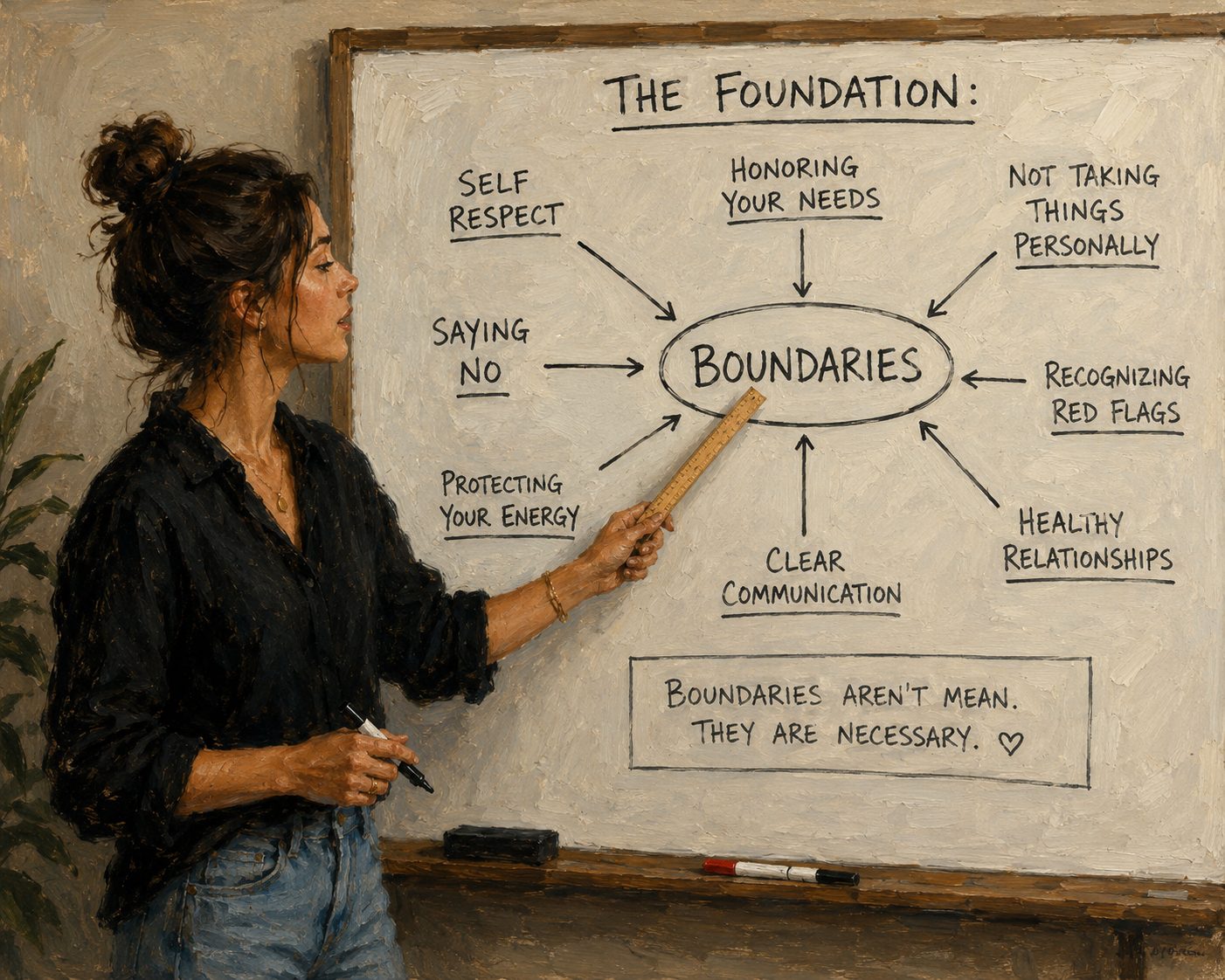
A lot of healing advice focuses on awareness, and that’s great. Learn the red flags. Set better boundaries. Love yourself more. Stop ignoring warning signs. Understand your attachment style. All of those things will benefit your life.
They are incredibly important parts of healing, but I think many people eventually reach a frustrating point where they realize that insight alone doesn’t seem to fully change their patterns, reactions, choices, or behaviors.
They understand the relationship intellectually, yet their body still reacts emotionally. They know someone is unhealthy for them, yet they still crave their attention. They can identify manipulation in real time and still feel pulled into the same emotional cycle anyway.
This is often where people begin turning against themselves. They start wondering if they are weak, broken, codependent, addicted to chaos, or the toxic ones themselves. They wonder why they keep “choosing” relationships and people that hurt them even after becoming self-aware and doing all the things.
I think that framing misses something deeper, though. A person can consciously want healthy love while their nervous system still associates love with anxiety, unpredictability, emotional intensity, or the constant need to earn reassurance. You cannot simply think your way out of patterns your body has spent years learning how to survive.
That’s why healing often feels so confusing. The logical part of you may understand exactly what is happening, while another part of you still feels emotionally attached to what’s familiar.
In many ways, the mainstream healing conversation unintentionally reinforces this confusion because it often treats healing like a purely conscious process. As though once someone learns enough about trauma, attachment, boundaries, or narcissism, they should naturally stop repeating painful dynamics.
But awareness alone cannot immediately override years of conditioning, survival patterns, and physiological responses the body has learned to associate with love and safety.
Knowing something is unhealthy doesn’t automatically stop your nervous system from reacting to it. In the same way that someone can understand smoking is harmful and still crave cigarettes under stress, people can understand a relationship is damaging while still feeling emotionally pulled toward it because the attachment exists deeper than conscious reasoning.
The body remembers what it has adapted to and survived.
It remembers the emotional environments it learned to survive in. The pace of them. The intensity. The unpredictability. The emotional rhythms that became familiar over time.
Because the nervous system is designed first around survival and predictability, people are often pulled toward what feels known long before they are pulled toward what is actually healthy. This is also why healing can feel so uncomfortable in ways people don’t always expect.
Healthy relationships may initially feel slower. Quieter. Less emotionally consuming. There may be less chasing, less uncertainty, less emotional volatility, and for someone whose nervous system became accustomed to intensity, calmness can temporarily feel unfamiliar or emotionally flat.
I think this is the piece many people are trying to articulate when they say healing is not just mental, it is physical too. The body itself has to slowly learn that safety does not mean emotional deprivation, and that peace is not the same thing as emptiness.
That kind of learning usually doesn’t happen through information alone. Change occurs through repetition, new experiences, and relationships where the nervous system gradually recognizes it doesn’t need to remain in survival mode to maintain connection.
Section 4: Healing Requires New Experiences, Not Just New Awareness
This is the part of healing that I think for many people in many ways, is the most uncomfortable part.
We can’t fully heal inside the same kinds of environments that taught our nervous system survival in the first place.
A person can read every book on trauma, understand attachment theory perfectly, recognize every red flag, and still struggle deeply if the relationships around them continue reinforcing the same fear, instability, emotional punishment, or lack of safety they have always known. Because healing is not just about understanding healthier patterns intellectually. It’s about experiencing them consistently enough that the body begins believing them too.
That usually requires relationships where it becomes safe to do things that once felt dangerous. Things like saying no, expressing disappointment, taking up space, or having needs. Disagreeing without fearing abandonment, setting boundaries without being punished for it, and being honest without having to manage another person’s emotional reaction.
For many people, those things feel unnatural at first. It feels terrifying.
If someone’s spent years in relationships where boundaries led to conflict, guilt, withdrawal, criticism, or emotional punishment, their nervous system learns that self-protection threatens connection. So even healthy behaviors can initially trigger anxiety because the body is expecting the consequences it learned in the past.
This is why healing can feel so contradictory. A person may consciously know they deserve healthier relationships while their nervous system reacts as though safety itself is dangerous.
This is also why safe relationships are so important to healing. Not perfect relationships or relationships without conflict, but relationships where repair is possible, where honesty is allowed, and where boundaries don’t destroy connection. A place where someone can say “I need space,” or “that hurt me,” without immediately fearing rejection, retaliation, or emotional abandonment.
This is part of why therapy can be so powerful for many people.
At its best, therapy is not just advice or listening. It becomes a safe relational experience. A place where someone can speak honestly, express emotion, disagree, cancel an appointment, say no, take up space, or reveal parts of themselves they learned to hide, and slowly discover that connection still remains intact afterward.
Often, healing happens in moments that seem very small from the outside.
The first time someone says no without overexplaining or the first time they express a need without apologizing for it. It happens the first time they realize disagreement doesn’t automatically lead to abandonment, or the first time they feel emotionally safe enough to stop monitoring every reaction in the room.
These moments may seem insignificant to someone who didn’t grow up adapting to relational instability, but for a nervous system shaped by survival, they are enormous.
Healing is rarely one giant breakthrough. More often, it is a slow accumulation of new experiences that quietly teach the body: You no longer have to betray yourself in order to stay connected to other people.
For anyone struggling with this part, I think it is important to hear this clearly:
You deserve safe people in your life, even if at first that safety only comes from yourself.
You deserve relationships where you can exist honestly without constantly fearing punishment, withdrawal, rejection, or emotional instability. You deserve to feel safe, loved, respected, and emotionally at peace.
If you were strong enough to survive the cycles that once taught your nervous system to live in survival mode, then you are strong enough to make it through the discomfort of healing, too.
Section 5: Why Healing Often Feels Worse Before It Feels Better
A lot of people expect healing to feel relieving right away. They think once they leave unhealthy relationships, set boundaries, or begin choosing healthier environments, they should immediately feel lighter, calmer, and more certain.
But often the opposite happens first. Without the constant distraction of survival mode, everything that was being suppressed begins surfacing. Grief emerges. Anxiety arises. Loneliness appears. Anger comes to the surface. Exhaustion sets in. Sometimes, even numbness is felt. When the nervous system is no longer focused entirely on surviving people, places, and things, the body finally begins processing what it never had space to process while inside it.
Have you ever seen those videos where someone slowly pours water into a wine glass filled with dark red wine?
At first, the wine does not instantly disappear and turn clear. Everything swirls together. The water becomes cloudy, dark, mixed with what was already sitting inside the glass. And before the water ever runs clear, all of the old wine has to slowly pour out first.
Healing can feel a lot like that.
When people begin introducing safety, honesty, boundaries, healthier relationships, rest, stability, or self-compassion into their lives, it often stirs up everything their nervous system has been carrying underneath for years, and this phase can feel incredibly discouraging if people don’t understand what’s happening.
Many start questioning themselves:
Why do I feel more emotional now?
Why am I struggling more after leaving?
Why does calmness feel uncomfortable?
Why do I suddenly feel exhausted all the time?
Often, these are not signs that someone is broken. They are signs that the nervous system is no longer spending every ounce of energy simply trying to survive.
This is also why healing can feel physically uncomfortable too. The body remembers chronic stress even after the environment changes. People often experience anxiety, fatigue, emotional swings, hypervigilance, numbness, difficulty relaxing, difficulty trusting, or even guilt for resting. Survival mode does not simply switch off overnight because someone intellectually understands they are now safe.
Sometimes, people also go through periods during healing where they feel like they are somehow getting worse instead of better, which therapists or psychologists might call skill regression during healing.
Things that used to feel easy suddenly feel exhausting. Someone who was always productive may struggle just to focus or get through basic tasks. Someone who used to hold everything together emotionally may suddenly find themselves overwhelmed, sensitive, irritable, anxious, or exhausted by things they normally could handle. Even simple things like texting people back, making decisions, socializing, concentrating, or getting out of bed can start feeling strangely difficult at times.
And honestly, this part can feel very scary and unsettling.
A lot of people start wondering:
What happened to me?
Why can’t I handle things the way I used to?
Why do I feel more emotional now that I’m finally safe?
It can feel like falling apart when, in reality, the nervous system is often just exhausted from holding itself together in survival mode for so long.
But often, it is the opposite.
Many survival skills were built specifically to function inside stress, hypervigilance, emotional suppression, people-pleasing, or constant crisis management. When the nervous system finally begins stepping out of survival mode, there is often a period where old coping mechanisms stop functioning before healthier regulation fully develops in their place.
Healing isn’t a straight line upward. Sometimes the nervous system has to destabilize old survival patterns before it can build new ones.
During that process, many people are tempted to return to old dynamics simply because those patterns still feel emotionally recognizable. Not because they consciously want pain, but because familiarity can temporarily feel more grounding than the uncertainty of change.
This is the part of healing where people need compassion for themselves the most, because healing rarely looks graceful while it is happening.
Sometimes it looks like resting more than you think you should, like grieving people you know were unhealthy for you. Sometimes it looks like feeling emotionally overwhelmed by situations other people seem to handle easily, or learning how to exist without constantly abandoning yourself to keep other people comfortable.
But over time, the fog does begin clearing.
Little by little, the nervous system stops expecting chaos everywhere. The body stops bracing constantly for emotional danger. Safe relationships stop feeling unfamiliar. Calmness stops feeling empty, and eventually, what once felt uncomfortable starts becoming the very thing that finally feels like peace.
Closing: Learning a Different Kind of Safety
I think one of the most important parts of healing is learning how to hold more complicated truths about people.
Most people are not entirely good or entirely bad. Instead, their behaviors are shaped by early lessons about love, survival, conflict, closeness, shame, fear, and connection, long before they fully understand themselves. Individuals adapt to their environments, developing defenses and repeating patterns. The ways they learned to relate to others may have helped them survive in the past, but these strategies can often become harmful to themselves and others over time.
That doesn’t excuse abuse, and it does not erase accountability, but it does mean that harmful people are not always obvious monsters. Sometimes they are wounded people who never learned how to love without fear, control, emotional volatility, self-protection, or pain woven into it. Sometimes they are repeating dynamics they experienced themselves. Sometimes they genuinely love someone and still hurt them deeply.
Life is complicated that way, and I think many people eventually realize that understanding someone’s pain and recognizing someone is unsafe for you are not mutually exclusive things.
You can have compassion for why someone became the way they are and still understand that being close to them destroys your peace. You can recognize patterns in someone’s relationships, emotional history, family dynamics, or unresolved wounds and still acknowledge the harm they cause.
Sometimes healing and growing mean accepting that not everyone is meant to stay close to us simply because we understand them.
Some people are not evil. Some people are not monsters, but they’re still not safe for your nervous system, your wellbeing, your stability, or your healing and learning. That distinction may be one of the most important parts of recovery.
Healing isn’t really about learning how to avoid all wounded people forever. Human beings are imperfect. We all carry pain, defenses, fears, and patterns shaped long before we had the ability to choose them consciously.
Healing is about learning which environments allow you to remain connected to yourself while inside them.
It is about learning that love should not require abandoning your needs, your boundaries, your peace, or your sense of reality in order to maintain connection. It is about teaching the nervous system that safety is not something you earn through suffering.
Over time, with enough safe experiences, honest relationships, boundaries, rest, and self-trust, the body slowly begins learning something new.
That calmness is not emptiness.
That consistency is not boredom.
That unfamiliar does not automatically mean unsafe, and that love doesn’t have to hurt in order to feel real.
We all have light and darkness within us, and shadows tend to keep playing themselves out in the dark until light is finally shone upon them.
Thank you for reading.
If any part of this resonated with you, I hope it reminded you that healing is far more layered, complicated, and human than many of us were taught to believe. So much of what people struggle with is not weakness, failure, or “choosing wrong,” but nervous systems trying to navigate patterns they learned long before they understood them.
Healing takes time. It takes awareness, honesty, safe relationships, boundaries, rest, repetition, and compassion for the parts of ourselves that learned to survive the only ways they knew how.
I write about relationships, nervous-system healing, trauma patterns, emotional growth, self-understanding, and the complicated ways human beings learn to love, protect themselves, and heal.
If you enjoyed this piece and would like to explore more of my work, I’d love for you to come visit my website at www.hellbloomhaven.com
Thank you for being here.