Not Everything Is About You
Why other people’s judgment often reveals more about them than it does about you
This article is also featured on Substack
Not Everything Is About You
There is something deeply human about the way people react to one another. Someone hurts us, disappoints us, judges us, rejects us, or makes us feel unseen, and almost instantly something inside of us begins forming a story around it. Some people turn inward, replaying conversations, questioning themselves, wondering what they did wrong. Others turn outward, becoming angry, resentful, defensive, or beginning to associate an entire type of person with that painful experience. Most people do some combination of both throughout their lives.
What makes this so complicated is that human beings rarely react to experiences as they are. We react through our conditioning, fears, insecurities, identities, attachment wounds, beliefs, and nervous systems. Two people can walk away from the exact same interaction with completely different emotional realities because neither person is experiencing life objectively. They are experiencing it through themselves.
This morning, while absentmindedly scrolling TikTok before the kids woke up, I came across a video of a man talking about prejudice. He explained that while passionately speaking about how much he hated prejudiced people, he suddenly realized he had unconsciously created another “us versus them” category in his own mind. The target had changed, but the emotional pattern had not.
That realization sparked something in me because it exposed something deeply uncomfortable about human nature: people often believe they are reacting to reality itself, when many times they are actually reacting to what reality stirs up inside of them.
A person carrying shame may perceive judgment everywhere, a person terrified of abandonment may interpret distance where none exists. A person who feels powerless may seek control, and another person with unresolved anger may constantly search for enemies. Someone who spent years feeling criticized may experience disappointment from others as emotional danger instead of temporary discomfort. Human beings are not blank slates rationally interpreting the world around them. We are shaped by experiences, survival patterns, emotional memory, and the meanings we have attached to pain.
That doesn’t mean harmful behavior should be excused. Pain can explain behavior without justifying it, but understanding this changes the way we carry both our own reactions and the reactions of others. Not every opinion is truth, not every criticism is insight, and not every emotional response is an accurate reflection of reality.
Many people spend their lives focused on the perceptions of others, striving not to disappoint or be misunderstood, often seeking validation from those they don’t admire. Others invest their emotional energy into hatred and resentment, allowing painful experiences with individuals to morph into bitterness toward entire groups.
Life is too short for both. It is too short to spend consumed by resentment. Life is too short to hand strangers authority over your nervous system. It is too short to lose yourself trying to manage the projections, expectations, and unresolved pain of people who may not even understand themselves yet.
Section 1: Why Do We Make Other People’s Reactions Mean So Much?
Most people don’t really realize how much of their life is shaped by reaction management.
We often soften our approach to avoid conflict, rehearsing conversations and overexplaining our intentions. We replay awkward interactions in our minds, worrying if we seemed rude, annoying, or not enough. Some people become peacekeepers, while others react defensively or shut down. Beneath these behaviors lies a common fear: What if someone’s negative reaction reflects something terrible about me?
For many people who grew up in an environment where love, safety, or approval felt inconsistent, another person’s disappointment may feel emotionally threatening rather than temporary. If criticism was constant, judgment can feel dangerous. If rejection once meant abandonment, conflict may feel unbearable. Human beings learn very early how to monitor the emotional environments around them in order to feel safe, loved, accepted, or protected.
That’s why reactions from other people can feel so powerful, even when logically we know they should not define us. The body does not always react to present reality alone. It reacts to emotional memory, too.
Some people cope in the opposite direction. Instead of internalizing pain, they externalize it. A painful interaction with one person slowly becomes resentment toward an entire group. Hurt hardens into judgment, fear hardens into anger, and disappointment hardens into superiority. Human beings tend to simplify pain by creating categories of “good people” and “bad people,” “safe people” and “dangerous people,” “us” and “them.”
But reality, life, and people are so much more complex than that.
Most people aren’t walking around as objective observers carefully analyzing life with perfect clarity and emotional neutrality. They are reacting through years of experiences, beliefs, fears, wounds, identity, conditioning, and survival patterns they may not even fully understand themselves. Two people can experience the exact same situation and walk away with entirely different emotional conclusions because neither person is experiencing reality untouched. They are experiencing reality filtered through themselves.
That realization changes things.
Not because it removes accountability, but because it creates perspective. It reminds us that another person’s reaction is not always a clean reflection of who we are, the mistake, the moment, or the criticism. Sometimes it’s a reflection of what our existence, words, choices, boundaries, confidence, vulnerability, or differences stirred up inside of them and us.
Section 2: What Are We Really Reacting To?
The older I get, the more I realize how little of life people are actually responding to objectively. We like to believe we are simply reacting to what is happening in front of us, but so often we are reacting to everything that happened before it too.
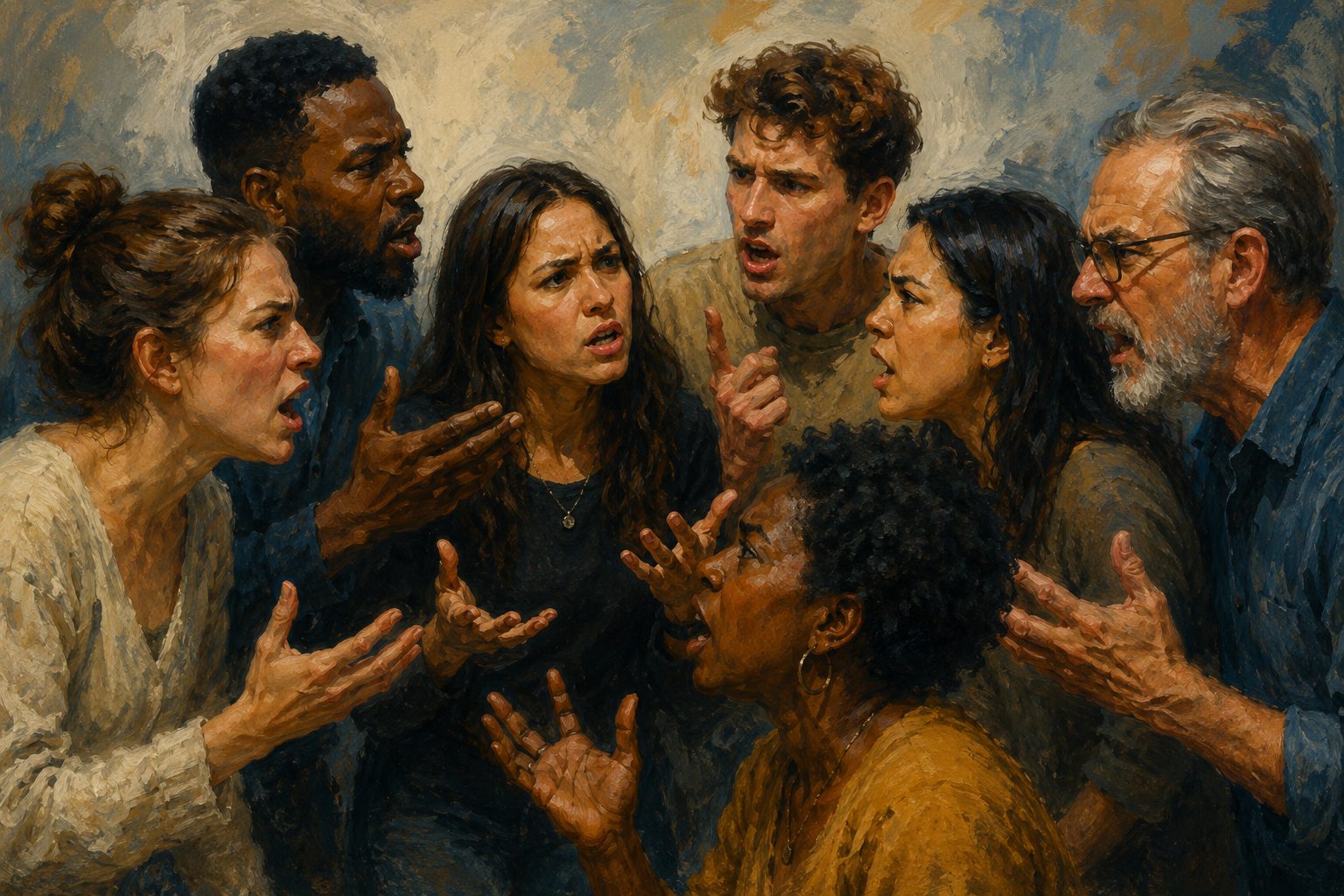
Sometimes I wonder how many arguments aren’t really about the present moment at all. How many people are reacting to old wounds without even realizing it. How many conversations are actually collisions between fears, insecurities, attachment wounds, pride, grief, shame, exhaustion, or years of emotional memory that neither person fully understands yet.
Projection is strange that way because it rarely feels like projection while it is happening. It feels real. It feels justified and often personal. A person carrying deep insecurity may genuinely experience confidence as arrogance. Someone who has been abandoned may feel distance where none was intended. A person who spent years being criticized may hear rejection in places where another person hears simple feedback.
Isn’t it strange how two people can experience the exact same situation and walk away holding completely different truths about what happened?
Maybe that’s part of why human relationships become so complicated. We aren’t only speaking from who we are now. We’re speaking from every version of ourselves that existed before this moment, too. The neglected child, the rejected teenager, the person who was betrayed, the person who learned love had conditions attached to it, or the person who learned safety could disappear without warning.
Sometimes I think people imagine healing means becoming perfectly rational and unaffected by life, but that’s just not realistic at all. We are emotional creatures, shaped by memory, experience, survival, fear, hope, longing, and pain. Of course, those things influence how we interpret each other.
This doesn’t excuse cruelty. While pain can help explain someone’s behavior, it doesn’t justify it. However, I believe that understanding this can create more room for perspective. It allows us to pause before we immediately determine that another person’s reaction defines our worth. It also gives us the opportunity to reflect on whether someone is truly seeing us clearly or if they are reacting to something from their own inner world that they have projected onto us.
I think all of us have done this at some point. Most people can probably look back and recognize moments where they misunderstood someone, projected fears onto a situation, or reacted emotionally before fully understanding what was actually happening. That does not make us monsters. It makes us human.
Perhaps the real danger lies not in the act of projection itself, but in the moment we cease to question our reactions. When every emotional response is accepted as absolute truth, and each uncomfortable feeling is viewed as evidence that someone else is wrong, dangerous, selfish, hateful, or against us, we enter a perilous territory.
Once people stop reflecting, it becomes very easy to build entire identities around resentment, fear, outrage, or division without ever asking: What is this really about?
Section 3: Why Do We Give Strangers So Much Authority Over Our Lives?
One thing I have been thinking about a lot lately is how strange it is that human beings will sometimes hand enormous emotional authority to people who know almost nothing about them.
A stranger online makes a comment, and it ruins someone’s entire day. A person who has never lived our life tells us what we should do, and suddenly we begin questioning ourselves. Someone who does not understand our history, our grief, our relationships, our limitations, our responsibilities, our sacrifices, or the weight we carry somehow ends up influencing decisions we will personally have to live with long after they forget the conversation ever happened.
Why do we do that?
Why are human beings so afraid to disappoint people who are not the ones who will have to live with the consequences of our choices?
I’m not saying this from some place of superiority because, honestly, I think almost everyone does this to some degree. I know I have. I think it’s deeply human to want reassurance, guidance, belonging, understanding, and approval. Human beings are relational creatures. We care what other people think because connection and acceptance have always mattered to survival in some form.
So this is not about shaming people for caring. It is more about stepping back for a moment and gently questioning why, and how much authority we hand over to people who have never actually walked in our shoes and couldn’t possibly fully understand unless they have.
The truth is, people advise through the lens of their own experiences, fears, conditioning, and limitations too.
Someone who regrets taking risks may encourage safety. Someone terrified of loneliness may tell you to stay in relationships that are hurting you. Someone who values appearances may prioritize what looks acceptable over what feels authentic. Someone who has never experienced your kind of pain may unintentionally minimize what feels unbearable to you.
People can only speak from the level of understanding they have reached within themselves, and sometimes I think we forget that.
We forget how filtered human perception really is. Every person is interpreting life through their own experiences, fears, conditioning, nervous system, beliefs, wounds, memories, and survival patterns. In a way, it almost reminds me of the childhood whisper game, where a message changes slightly every time it passes through another person until by the end it barely resembles what it started as.
Human beings do this constantly with life itself.
Someone experiences betrayal, and suddenly love becomes dangerous. Someone experiences abandonment, and independence begins feeling threatening. Someone takes a risk that ended painfully, and now safety feels wiser than possibility. People often pass their emotional conclusions to others as truth without fully realizing how shaped those conclusions are by their own experiences.
When we are disconnected from ourselves, it becomes very easy to start making decisions about our lives using information filtered through realities that were never actually ours or that will even benefit ours to begin with.
We forget that people are not handing us truth from some all-knowing, objective place. They are handing us interpretations shaped by their own lives, their own wounds, their own nervous systems, their own regrets, and their own fears about what they personally would or would not survive.
At the same time, I think many of us have also been the person making assumptions about someone else’s life without fully understanding the complexity of what they were carrying. Most people have probably looked back at some point and realized they judged a situation too quickly or formed opinions without knowing the full story. Again, I don’t think that makes people cruel so much as human.
We only ever see fragments of each other, yet so many people spend years trying to become acceptable to everyone around them, even when those people would never truly understand the reality they are living.
The truth is, nobody else has to live your life once the conversation or interaction ends.
Every single person giving opinions, advice, criticism, judgments, or reactions is also just another human being trying to navigate a life they also don’t fully understand either. No one has a perfect life. No one is walking around with all the answers. The world is far too vast, complicated, and layered for any one person to fully understand everything about life, humanity, relationships, pain, healing, survival, or even themselves.
Every person is shaped by different experiences, different wounds, different environments, fears, privileges, losses, biology, different nervous systems, and different ways of coping with being alive. Every person is capable of misunderstanding situations, projecting fears, reacting emotionally, getting things wrong, contradicting themselves, or speaking from places of pain they may not even consciously recognize yet.
At the same time, almost everyone is trying to survive something.
Trying to belong somewhere.
Trying to feel safe.
Trying to feel understood.
Trying to make sense of their own emotions, identity, struggles, grief, loneliness, fear, or longing while moving through a world that can often feel overwhelming and uncertain.
That perspective doesn’t make people’s opinions meaningless, but it does make them human, and I think there’s something very freeing about realizing that the people whose approval we desperately seek are often just as confused, wounded, uncertain, emotional, and unfinished as we are.
They don’t have to sit with the consequences of your choices in the quiet moments at night. They don’t have to wake up inside your relationships, your body, your grief, your mind, your responsibilities, your healing journey, or your regrets.
You do.
I think there comes a moment in life where people slowly begin realizing that being understood by everyone is impossible anyway. No matter how carefully you explain yourself, some people will still misunderstand you through the lens of who they are.
Some people will judge you for choices you pray they have never had to make or have to make. Some people will criticize pain they have never had to survive. Some people will offer certainty about situations they have never actually lived through, and often, we just blindly believe them.
Section 4: How Much of Life Do We Lose to Resentment?
Sometimes I think about how much of people’s lives are spent emotionally consumed by people we don’t even really like.
People lose sleep over strangers online. Families will stop speaking for years. Entire identities become built around outrage, opposition, resentment, proving a point, or needing to be right. Someone says something hurtful, ignorant, dismissive, or cruel, and suddenly hours, days, or even years of emotional energy begin orbiting around that moment. I understand why, I have been there too, but it is wild sometimes when you stop and think about it.
Some wounds cut deeply. Some injustices are real. Some experiences genuinely change people. They change the way someone sees the world, the way their nervous system responds to stress, the way their body carries tension, the way they trust, connect, protect themselves, or move through relationships. Certain experiences do not just leave emotional memories behind. They can reshape a person’s lens, health, sense of safety, identity, and relationship with life itself.
I don’t think human beings are meant to suppress pain and pretend everything is fine simply. Anger can reveal violated boundaries, grief can reveal love, hurt can reveal where something mattered deeply to us, and fear can reveal where someone no longer feels safe. Pain is not always weakness or overreaction. Sometimes it is evidence that something meaningful, unfair, frightening, or life-altering happened.
Acknowledging that matters because healing is not the same thing as denial. At the same time, I also think there’s a difference between feeling pain and building a home inside of it.
There is a difference between honoring our past experiences and allowing them to become the sole perspective through which we view ourselves, others, and the world. Pain can significantly alter our perception when left unexamined. For instance, hurt may lead to hypervigilance, betrayal can foster distrust toward everyone, and rejection might create the belief that love is unsafe. Survival patterns that once protected us can quietly turn into prisons, confining us long after the original danger has passed.
I again don’t say that with judgment because I think many people are trying to survive experiences that changed them in ways other people cannot fully see from the outside.
The older I get, the more I realize how precious energy actually is. I become increasingly aware of how valuable energy truly is. Attention and time are equally precious. Life feels remarkably fragile when you take a moment to reflect on it. One day, people are online, arguing, judging strangers, and fixating on what others believe, wear, post, or say. Then, suddenly, someone is gone forever, and all those disputes seem insignificant compared to what really matters.
Sometimes I wonder how much peace we as people sacrifice trying to emotionally fight battles that were never meant to be carried forever, especially because resentment has a way of attaching us to the very things we claim to hate.
A person can become so consumed trying not to become cruel that they become hardened themselves. Someone can become so obsessed with fighting judgment that they begin viewing the world entirely through judgment too. Pain that is not processed often spills outward somewhere else.
Most people have had moments where anger took up more space than they wanted it to. Most people have replayed conversations, obsessed over being misunderstood, or mentally argued with people long after the interaction ended.
I just think there comes a moment where people quietly begin asking themselves: “How much of my life do I want to spend emotionally trapped by this?”
Because time keeps moving either way.
There are sunsets people miss while scrolling through outrage. There are conversations left unsaid. There are beautiful, ordinary moments that disappear while people are mentally defending themselves against strangers who may never think about them again after the moment passes.
Section 5: Maybe We Are All Just Trying to Feel Safe
I personally have never really been able to see people as simply “good” or “bad.” Human beings have always felt far more complicated than that to me. I have understood from a young age that people are carrying invisible stories underneath the version of themselves the world sees. Fear disguised as anger. Grief disguised as control. Shame disguised as superiority. Loneliness disguised as avoidance. Pain disguised as judgment.
Sometimes when people are reactive, angry, defensive, controlling, withdrawn, or desperate to be understood, I have a hard time not viewing them through the lens of their inner child. Part of me always wonders what emotional need underneath the behavior is crying out to be seen, soothed, protected, validated, or understood.
Sometimes I think adults are often just children trying to protect wounds they never fully learned how to heal.
I want to be really careful saying that because I’m not trying to excuse harmful behavior. I think accountability, boundaries and safety matter deeply. Some people genuinely are unsafe to remain close to. Some relationships do need distance. Some cycles do need to end. Pain can explain behavior without justifying it.
I do think there’s something healing about remembering that most people are not waking up every morning trying to become villains in someone else’s story or reading books on how to treat people badly. Most are simply moving through life reacting from whatever fears, conditioning, emotional survival patterns, beliefs, grief, attachment styles, or unmet needs they developed along the way.
Including us.
I think for a long time I confused understanding people with being responsible for them. If I could see the wound underneath the behavior, part of me felt obligated to help carry it somehow. But the older I get, the more I now realize that compassion and boundaries are not opposites.
I can recognize someone’s unmet needs without making myself responsible for meeting all of them.
There are wounds I cannot heal for another person. There are some needs I do not have the emotional resources, time, energy, capacity, or responsibility to carry, and I think that realization was important because compassion without boundaries can slowly turn into self-abandonment.
I think that’s why self-reflection matters so much. Not because we should endlessly blame ourselves for everything, but because awareness gives us choices. The more aware we become of our own projections, wounds, triggers, and patterns, the less likely we are to hand them to other people as if they are objective truth.
Closing
Maybe this is part of what it means to grow through life with awareness instead of fear. Human beings are emotional creatures shaped by experiences, relationships, survival, memory, love, rejection, grief, and belonging. Every individual on this earth experiences their own reality, interpreting life through their unique lens, personal wounds, individual nervous system, and understanding of the world. Once you begin realizing that, other people’s reactions stop feeling quite so absolute.
Some opinions carry wisdom and projection. Some carry fear, pain, insecurity, or unresolved experiences that have very little to do with the person standing in front of them. I think part of healing is learning how to slow down enough to recognize the difference without losing yourself inside of every reaction, expectation, criticism, or emotional response surrounding you.
I was thinking recently about how tarot readers on TikTok often say, take what resonates and leave the rest, and honestly, I think there is a lot of wisdom in that far beyond tarot itself. Sometimes resonance is an invitation into deeper self-awareness, a chance to gently explore what something stirred up inside of you, where it connects, what it reminds you of, or what part of yourself is asking to be seen more clearly.
The more people heal, the more they begin learning how to trust themselves. The more they separate their own inner knowing from fear, conditioning, shame, noise, expectations, and the endless opinions surrounding them, no one else can fully walk your path for you.
People can love you, guide you, support you, teach you, and walk beside you, but they cannot live your life from inside your mind, body, soul, experiences, relationships, or connection with God. There are lessons only you can learn firsthand. Choices only you can make. Parts of yourself only you can discover.
There is something deeply empowering about remembering that you are allowed to be and should be the captain of your own ship. Not because you will always get everything right. None of us do. But because your life will finally belong to you.
Thank you so much for reading and reflecting alongside me. If you would like to explore more reflections, healing-centered writing, grounding tools, self-discovery resources, services, and supportive spaces, you can visit my website at www.hellbloomhaven.com