
Education, Resources, and Reflection for Survivors and Soul Rebuilders
Welcome to the Trauma Portal
Trauma has shaped many parts of my own life in ways I did not understand for a long time. Growing up, I experienced things that I did not have language for. I didn’t know how to describe what was happening, and I didn’t know that many of my patterns were responses to survival.
For years, I thought something was wrong with me.
What I eventually learned is that trauma often hides in plain sight. It does not always appear as a single dramatic event. More often, it lives quietly inside behaviors, coping strategies, relationship patterns, body responses, and beliefs about ourselves long before we ever have words for it.
Many of the things people criticize themselves for, anxiety, emotional shutdown, people-pleasing, hyper-independence, difficulty trusting others, feeling “too much” or “not enough”, can develop as intelligent adaptations to environments that required survival.
Without language for those patterns, it is easy to internalize shame and believe the problem is personal.
Something else I learned along the way is that trauma does not always look the way people expect it to. Some people show visible signs of distress. Others appear capable, independent, productive, or emotionally steady on the surface. The absence of what people commonly recognize as trauma responses does not mean trauma was not present. Human brains and bodies adapt in many different ways.
I created this portal because I wanted something I did not have growing up: clear language, steady education, and accessible pathways to understanding.
Trauma literacy can change the way people understand themselves. When experiences are named and placed in context, confusion often begins to shift into clarity. Patterns that once felt like personal failures can begin to make sense as adaptations that developed under pressure.
My hope is that you can find words earlier than I did. That you can name patterns sooner. That you can recognize what developed for survival and begin moving toward healing with more clarity than confusion.
I also want to be transparent about what this space is and what it is not. I am not a licensed mental health provider. I am someone who has lived through significant trauma and life-changing experiences and who has spent nearly two decades working to understand, process, and heal from them. Over those years I have read extensively, learned from research, listened to many professionals and survivors, and gradually made sense of patterns that once felt confusing and overwhelming.
This portal grows out of that personal journey.
It is meant to be an educational resource that brings together language, research, lived experience, and practical understanding. The goal is to help people recognize patterns, understand how trauma can shape the nervous system and relationships, and explore pathways toward healing.
Some pages focus on understanding trauma itself. Others explore common survival patterns, relational dynamics, and the ways trauma can shape identity, attachment, and the nervous system over time. Additional sections explore healing, regulation, and the gradual process of recovery.
You may recognize parts of your story here. You may also discover experiences or patterns you had never considered through the lens of trauma before. Both are part of the process.
This portal does not attempt to cover every possible trauma experience. Human lives are complex, and the ways people adapt are incredibly varied. If there is a topic you hoped to see here and do not find, you are welcome to reach out and suggest it.
This space is intended to offer understanding, context, and language for experiences that many people struggle to explain. It is educational in nature and not a substitute for therapy, medical care, or professional mental health treatment when those are needed.
What This Portal Is
The Trauma Portal is an educational resource designed to help people explore trauma and recovery through organized, trauma-informed learning.
Rather than presenting information as a single article or guide, the portal is structured into sections that focus on different aspects of trauma and healing. Each section builds on the others, allowing you to explore topics gradually and at your own pace.
Some areas focus on understanding trauma itself, how stress responses develop, how environments shape adaptation, and how the nervous system learns to respond to threat.
Other sections explore common experiences that often appear in trauma recovery, including developmental trauma, relational harm, survival patterns, and intergenerational or systemic influences.
Later sections focus on healing, regulation, and the gradual process of rebuilding safety, identity, and connection over time.
You do not need to move through the portal in a specific order. Many people begin with the topics that feel most familiar to their own experiences and then explore outward from there.
Within the portal you can:
• learn how trauma can shape the nervous system and stress responses
• identify different forms of trauma, including relational, developmental, systemic, and collective experiences
• recognize survival adaptations that may have once felt confusing or isolating
• explore coping patterns that develop in response to prolonged stress
• learn about nervous system regulation and trauma-informed healing practices
• access supportive resources and additional educational material when needed
Trauma is not only what happened.
It is also how the body and mind adapted when safety felt uncertain or unavailable.
This portal exists to help make those adaptations easier to understand and to provide a clear pathway for learning about recovery.
You are not expected to absorb everything at once. The goal is simply to provide a place where understanding can unfold gradually, with clarity and without judgment.
Note on Emotional Safety
Some of the material inside this portal discusses trauma, abuse, systemic harm, and survival responses. Reading about these topics can sometimes bring up memories, body sensations, or emotions you were not expecting.
You are encouraged to move slowly. There is no expectation to explore everything in one sitting. Taking one section at a time and pausing when needed is often more supportive.
If at any point you begin to feel overwhelmed, consider:
• Stepping away from the screen
• Taking a few steady breaths
• Placing your feet firmly on the floor
• Reaching out to someone you trust
If you are in immediate distress or feel unsafe, please contact local emergency services in your area.
In the United States, you can call or text 988 to reach the Suicide & Crisis Lifeline. If you are outside the U.S., local health services or the International Association for Suicide Prevention (IASP) can help you locate crisis support in your country.
This portal is educational in nature and does not replace licensed mental health care.
Your pace matters.
How to Use This Portal
This portal is organized around core themes rather than a required sequence.
Each section offers a different lens into understanding trauma. You might begin with the nervous system. You might begin with relationships. You might begin with childhood experiences, coping patterns, or systemic harm.
There is no correct order.
Each theme connects to others, allowing you to follow what feels most relevant without navigating a rigid path.
The circles below represent the primary areas of exploration within the Trauma Portal. You can enter through any of them.
You do not need to read everything.
One page at a time is enough.
Ways People Enter This Space
Some people arrive thinking:
“I think something happened.”
“I don’t know what’s wrong with me.”
“I keep repeating patterns.”
“I feel dysregulated and don’t know why.”
Wherever you begin, the goal is the same:
Understanding
Language
Regulation
Resources
Clarity often reduces shame.
Begin Exploring
If you’re unsure where to start, many people begin with:
• Trauma Understanding & Recovery
• Nervous System Regulation & Safety
If you prefer a complete overview of available topics and tools, visit the Recovery Tools, Resources & Portal Index.
You are not required to move through everything.
Follow what feels steady.
🌿A Gentle Reminder
Trauma responses are adaptations. Patterns develop for survival.
Many of the reactions people struggle with, anxiety, shutdown, hypervigilance, people-pleasing, emotional distance, or difficulty trusting, often began as ways to navigate environments where safety was uncertain. What may feel confusing or frustrating now often made sense at the time it developed.
Learning the language for these patterns is not about assigning blame to yourself or to others. It is about creating context for experiences that may have once felt chaotic or difficult to explain.
Understanding how adaptations formed can make it easier to see where change is possible.
Awareness does not erase the past, but it can open space for steadiness, choice, and new ways of responding over time.
There is a quiet power within you, one that’s been waiting, not for perfection, but for permission. Support can guide you, but healing begins when you start listening to yourself.
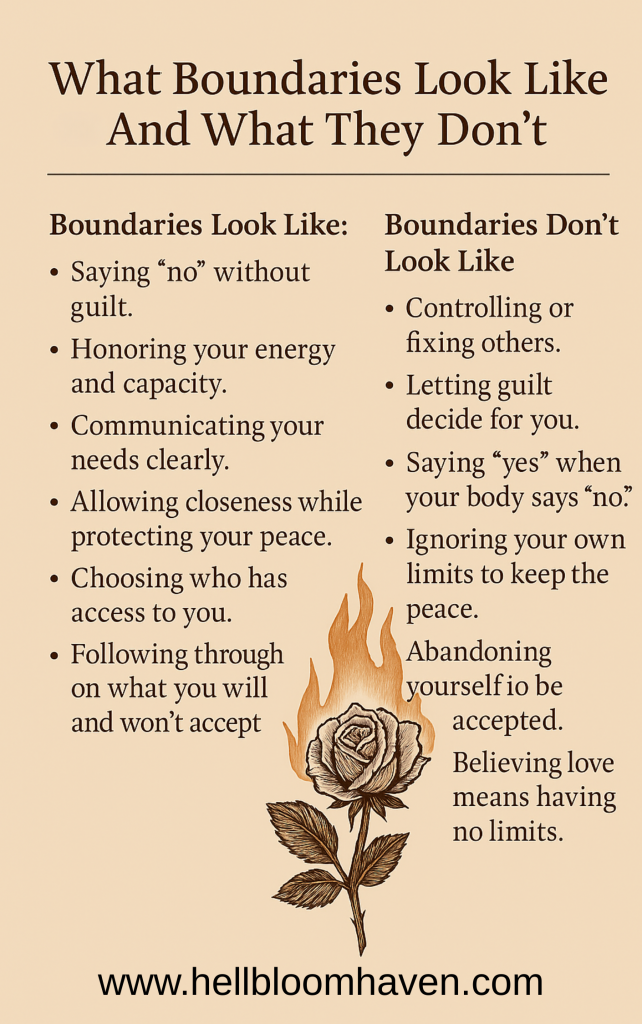
Ready to Strengthen Your Boundaries?
Your boundaries are not walls, they’re bridges to safer, more honest connection.
If you’re ready to get clearer on what you will and won’t accept, start here.
👉 [Download My Free Boundaries Workbook]
A gentle, printable guide to help you reflect, define, and practice your personal limits, without guilt.
Poetry as a Pathway to Healing
Before I had language for trauma, I had writing.
Journaling, letters I never sent, and eventually poetry became ways to process experiences that felt difficult to name. Writing helped me organize emotion, notice patterns, and reconnect with parts of myself that felt fragmented.
Over time, that private process became something I chose to share.
My poetry and essays explore themes of trauma, identity, loss, resilience, and healing. They are not clinical explanations, they are reflections shaped by my own lived experience.
If you connect with learning through story, metaphor, or creative expression, you are welcome to explore that work.
You can read my ongoing writing on Substack:
hellbloomhaven.substack.com
You can also visit the Poetry Portal to find my published books and collections.
Creative expression is one way people make meaning of their experiences.
It is not required for healing, but for some, it becomes a steady companion.
A Note on Support, Boundaries & Peer Connection
This portal is educational in nature. It does not provide therapy, diagnosis, or clinical treatment.
In addition to the material here, I offer non-clinical peer support sessions for those who would like a structured, regulated space to talk.
These are 60-minute virtual sessions held via Google Meet. They are designed for reflection, processing, or having space to speak openly about what you are navigating.
Peer support is not therapy. I am not a licensed mental health provider, and these sessions do not replace clinical care. If you are experiencing acute trauma symptoms, active crisis, or significant mental health concerns, working with a licensed therapist is strongly encouraged.
Peer sessions may be supportive if you are:
• Looking for a steady, non-judgmental space to talk
• Trying to organize your thoughts around patterns or experiences
• Wanting grounded conversation without a clinical framework
• Seeking support alongside therapy, not instead of it
If you are unsure where to begin, you may also explore the Recovery Tools & Resource Index, which provides a full overview of the portal and links to external resources.
If you are searching for trauma-informed therapy or local support and cannot find what you need, you are welcome to reach out through the contact form. I will do my best to help you locate appropriate resources.
To learn more about peer sessions or to book, visit the Come As You Are page.
Boundaries matter in this space. Sessions are offered as paid services so that this work can remain sustainable, structured, and grounded.
Support can take different forms.
Education is one.
Conversation is another.
Clinical care is another.
You are allowed to choose what fits your needs.
Need Help Finding a Resource That Feels Right for You?
Whether you’re searching for culturally-competent support, trauma-informed spaces in your area, or affordable options, I invite you to reach out.
I’m not a licensed therapist, but I’m a compassionate guide, creative problem-solver, and skilled researcher. I’ll do my best to help you find something that aligns with where you are and honors who you are.

