

Feeling Overwhelmed? Ground Yourself & Breathe | Hellbloom Haven
Grounding & Safety Practices
When your nervous system moves into overwhelm or shutdown, your ability to think clearly, respond intentionally, or access what you need can begin to shift.
In those moments, your system is no longer operating from a place of balance. It is responding to what it perceives as too much, too fast, or not safe enough to fully process.
Grounding and safety practices are not about forcing yourself to calm down or fixing what you feel. They are ways of working with your nervous system rather than against it, helping it move gradually back toward a state where you can feel more present, more stable, and more connected to yourself.
🌿 What Grounding Really Means
Grounding is the process of returning your awareness to the present moment through your body and your environment.
When your system becomes dysregulated, your attention often shifts away from what is here and now. It can become pulled into anxious thoughts, overwhelming sensations, or a sense of disconnection that makes it difficult to feel anchored.
Grounding interrupts that shift by creating contact with something real and immediate. It brings your attention back to what you can see, feel, hear, or physically experience. That contact helps your nervous system recognize that it is no longer in the same level of threat, allowing it to begin settling at its own pace.
🌿 What Safety Means in the Body
Safety is not just a thought or a belief. It is a physiological experience that your nervous system either registers or it does not.
It is possible to know logically that you are safe while your body continues to respond as if you are not. This is because your nervous system is not guided by logic alone. It is shaped by past experiences, patterns, and what it has learned to associate with safety or danger over time.
Practices that support safety are not about convincing yourself that everything is fine. They are about creating conditions that your body can begin to recognize as less threatening. This might include slowing your breath, orienting to your surroundings, or bringing gentle awareness to your body. Over time, these signals can help your system shift out of protection and into a state that feels more settled.
🌿 Why These Practices Matter
When your nervous system is outside of its window of tolerance, it becomes more difficult to access the parts of you that think clearly, make decisions, or feel grounded.
Grounding and safety practices create small points of stability within that experience. They do not remove the stress immediately, but they begin to change how your body relates to it.
With consistent practice, your system can start to recognize these moments as cues of safety. That recognition makes it easier to return to a more regulated state over time, even in situations that previously felt overwhelming.
🌿 A Different Way to Approach It
These practices are not meant to be performed perfectly or used all at once.
What matters is noticing what your system needs in a given moment and responding in a way that feels manageable. Sometimes that may look like slowing down. Other times it may look like gently re-engaging with your body or your environment.
The shift happens when you begin to meet yourself where you are instead of trying to force yourself into a different state.
Grounding & Safety Practices
Open each practice for a simple way to support your nervous system in the moment.
Breathe
When your system feels activated, your breath can become shallow or hurried. Slowing it down can help communicate safety to your body.
Inhale gently through your nose for a count of 4. Exhale slowly for a count of 6. Repeat this a few times without forcing the breath. Let the exhale be soft and unhurried.
The goal is not to breathe perfectly. It is simply to give your system a slower rhythm to follow.
Orient to Your Environment
When your mind is pulled into overwhelm, fear, or disconnection, orienting helps bring your attention back to what is here and now.
Slowly look around the room and notice a few things you can see. Let your eyes land on shapes, colors, textures, or light. Take your time. Allow yourself to notice that you are here, in this space, in this moment.
Sometimes safety begins by gently reminding your body that the present is different from the past.
Reconnect to Your Body
When you feel numb, frozen, or disconnected, it can help to return to simple physical sensations without pushing for too much too quickly.
Press your feet into the floor. Notice the support beneath you. Rub your hands together, hold a blanket, or place one hand over your chest and the other over your stomach. Focus on what you can physically feel.
Reconnection does not have to happen all at once. Even a small point of contact with your body can begin to create stability.
Create Safety
Safety is something your nervous system experiences through cues, not just thoughts. Small signals can help your body begin to soften.
Wrap yourself in something warm, sit in a supportive chair, dim harsh lighting, or place a hand over your heart. You might also quietly remind yourself, “I am here right now,” or “I can move slowly.”
Safety is often built through small, repeated moments of support rather than one immediate shift.
🌿 Closing
There is nothing wrong with you for needing support in these moments.
Your nervous system is responding in the only way it knows how, based on what it has learned over time. Grounding and safety practices are not about fixing that response, but about meeting it with something different.
Over time, those small moments of support begin to accumulate. Your system starts to recognize that it does not have to stay in survival mode, and that shift can happen gradually, without force.
Explore Your Healing Path
Each section offers a different way to understand yourself more deeply, follow what feels most relevant to you right now.


🌿 Explore Tools & Support
If you feel like you’d like a little more support as you move through this work, you don’t have to do it alone.

I want to understand what I’m feeling

I want to keep exploring gently

I want something to support me along the way

I’d rather not do this alone
Take your time. Explore, look around, there’s no pressure.
Thank you for being here and taking a moment to explore Hellbloom Haven. Your presence is truly appreciated.
-
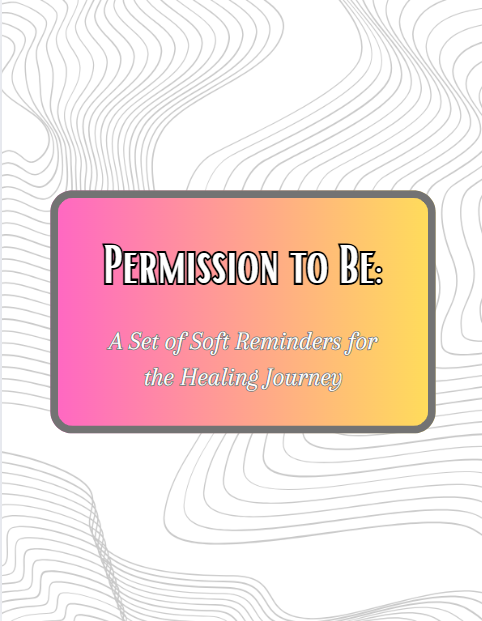
Affirmation Deck-Permission To Be
$7.00 -
Ritual workbook- Sacred Space For Healing, Releasing, & Remembering
$15.00 -
Shadow Work Companion Guide- The parts we hide pdf
$11.00 -
Somatic Healing Cards: Gentle Prompts for Reconnecting with Your Body
$7.00 -
The Inner Child Deck: Truths & Tender Reminders
$7.00
Find My Books On Amazon
(click image for link to product)

A reflective journey into the stories we grow up believing, I Hope You Know invites you to gently question, unravel, and rewrite the narratives that shaped you. Through insight and encouragement, this book helps you reconnect with your truth, your worth, and the life you’re allowed to create.

Rising Through the Wreckage is a trauma-informed workbook designed to help you actively move through healing. Blending somatic practices, spiritual reflection, and guided exercises, it offers a supportive space to process your experiences, reconnect with your body, and begin rebuilding with clarity and intention.

Breaking the Spell is a trauma-informed workbook designed to help you understand and move through limerence. Through guided prompts, reflection, and practical exercises, it supports you in recognizing patterns, reconnecting with yourself, and gently breaking the emotional cycles that keep you stuck.