
Feeling Overwhelmed? Ground Yourself & Breathe | Hellbloom Haven
SELF-COMPASSION & INNER DIALOGUE
Learning to relate to yourself with understanding, care, and support. The way you speak to yourself matters. Your inner dialogue, the thoughts, tone, and responses you have toward yourself, shapes how you experience your emotions, your challenges, and even your sense of worth.
For many people, this inner voice isn’t naturally kind. It may sound critical, impatient, dismissive, or harsh, especially in moments of struggle, failure, or vulnerability.
But this voice didn’t come from nowhere. It was learned.
🌿 Where Your Inner Dialogue Comes From
Your inner voice is often shaped by early experiences,
how you were spoken to, how your emotions were responded to, and what was expected of you.
Over time, these external voices become internalized.
You may notice:
- A critical voice that pushes you to do better or be more
- A dismissive voice that minimizes your feelings
- A fearful voice that anticipates mistakes or rejection
These voices often developed with a purpose:
👉 to protect you, guide you, or help you adapt
But over time, they can become misaligned with what you actually need.
💛 What Self-Compassion Really Is
Self-compassion is not about avoiding responsibility or ignoring growth.
It’s about how you relate to yourself while you grow.
It means:
- Speaking to yourself with kindness instead of criticism
- Allowing your emotions instead of suppressing them
- Supporting yourself instead of abandoning yourself
It’s the difference between:
- “What’s wrong with me?”
and - “Something is hard right now, how can I support myself through it?”
🌿 Why This Matters
Your inner dialogue directly impacts:
- Your emotional regulation
- Your nervous system state
- Your resilience during difficult moments
- Your ability to change patterns and behaviors
When your inner voice is harsh:
- You may feel more overwhelmed, ashamed, or stuck
- Growth can feel unsafe or pressured
When your inner voice is supportive:
- You feel safer to process emotions
- You’re more able to respond instead of react
- Change becomes more sustainable
Self-compassion creates internal safety—
and safety is what allows healing to happen.
🧠 A Deeper Understanding
Many people believe that being hard on themselves is what keeps them motivated.
But research shows the opposite.
Self-criticism often increases:
- Anxiety
- Avoidance
- Shame
While self-compassion supports:
- Accountability without shame
- Emotional resilience
- Long-term behavioral change
This doesn’t mean your critical voice is “bad.”
It often developed to:
- Prevent mistakes
- Protect you from judgment
- Help you stay accepted or safe
But now, you have the opportunity to relate to yourself differently.
💛 Changing Your Inner Relationship
This work is not about silencing your inner critic.
It’s about:
- Understanding it
- Softening it
- Creating a new, more supportive voice alongside it
Over time, this becomes your inner support system,
the voice that helps you feel grounded, capable, and safe within yourself.
🌱 What This Page Helps You Do
This space is designed to help you:
- Notice and understand your inner dialogue
- Recognize patterns of self-criticism or self-abandonment
- Begin shifting toward a more compassionate, supportive voice
- Build a more stable and safe relationship with yourself
Not by forcing positivity,
but by creating something real, honest, and supportive.
Closing: The Relationship You’re Building
This work isn’t about fixing yourself, it’s about changing the way you meet yourself.
You’ve taken time to notice what’s happening internally, to question what felt automatic, and to begin responding with something more steady and supportive. That matters more than it might seem.
Because this is where things begin to shift, not in one perfect moment, but in the gradual way you start relating to yourself differently.
You’re not pushing yourself as hard, not speaking to yourself in the same way, not abandoning yourself in the moments that feel uncomfortable. You’re learning how to stay.
What Happens From Here
There will still be moments where old patterns show up, where the inner voice feels sharp, impatient, or familiar.
That doesn’t undo anything.
What changes over time is how quickly you recognize it, and how you choose to respond when you do. Even a small shift in tone, even a slightly different response, begins to build something new.
Not perfectly. Just intentionally.
Take Something With You
You don’t need to hold onto everything from this page.
Just take one thing that felt real, a sentence that softened something, a perspective that felt more honest, or a tone that felt a little more supportive than before.
Let that be enough to return to.
Explore Your Healing Path
Each section offers a different way to understand yourself more deeply, follow what feels most relevant to you right now.

🌿 Explore Tools & Support
If you feel like you’d like a little more support as you move through this work, you don’t have to do it alone.

I want to understand what I’m feeling

I want to keep exploring gently

I want something to support me along the way

I’d rather not do this alone
Take your time. Explore, look around, there’s no pressure.
Thank you for being here and taking a moment to explore Hellbloom Haven. Your presence is truly appreciated.
-

Affirmation Deck-Permission To Be
$7.00 -
Ritual workbook- Sacred Space For Healing, Releasing, & Remembering
$15.00 -
Shadow Work Companion Guide- The parts we hide pdf
$11.00 -
Somatic Healing Cards: Gentle Prompts for Reconnecting with Your Body
$7.00 -
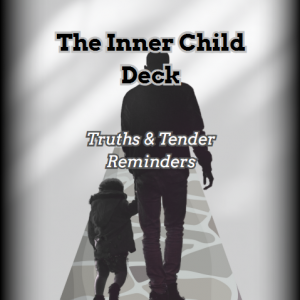
The Inner Child Deck: Truths & Tender Reminders
$7.00

Find My Books On Amazon
(click image for link to product)
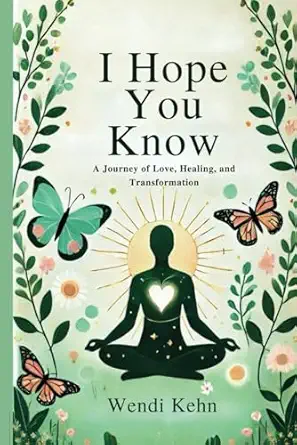
A reflective journey into the stories we grow up believing, I Hope You Know invites you to gently question, unravel, and rewrite the narratives that shaped you. Through insight and encouragement, this book helps you reconnect with your truth, your worth, and the life you’re allowed to create.

Rising Through the Wreckage is a trauma-informed workbook designed to help you actively move through healing. Blending somatic practices, spiritual reflection, and guided exercises, it offers a supportive space to process your experiences, reconnect with your body, and begin rebuilding with clarity and intention.

Breaking the Spell is a trauma-informed workbook designed to help you understand and move through limerence. Through guided prompts, reflection, and practical exercises, it supports you in recognizing patterns, reconnecting with yourself, and gently breaking the emotional cycles that keep you stuck.