
The Apple Tree Doesn’t Eat Its Own Apples
On survival, quiet impact, and the small ways we shape each other’s lives
Also Featured On Substack & Medium
Mar 07, 2026
The Apple Tree Doesn’t Eat Its Own Apples
I’ve always been deeply moved by stories about people who have survived and stories of people who change lives.
The kind of stories where someone sees suffering in the world and decides to do something about it. Where a person shows up for others in ways that create ripple effects far beyond what they probably imagined. The teacher who refuses to give up on a struggling student. The person who dedicates their life to helping people through impossible circumstances. The quiet moments where someone’s compassion or courage alters the trajectory of another person’s life.
I’m drawn to those stories in every form they appear, books, films, memoirs, documentaries, survivor narratives. Stories of people who endured extraordinary hardship. Stories of people who stepped into difficult spaces and helped others find hope again. Those stories have always inspired me in a way that’s hard to fully explain.
I don’t watch them casually. I absorb them, I sit with them, and I think about the people in those stories long after the credits roll or the last page is finished. Something about them stirs something very deep in me and always has.
I find myself thinking about the kind of person who does that, the kind of person who shows up in the world in a way that changes lives. The kind of person who inspires others simply by the way they live, the way they care, the way they refuse to turn away from people who are hurting.
If I’m honest, I’ve spent a lot of my life quietly wondering how someone becomes that person. I know we aren’t supposed to compare ourselves to others, and I don’t look at those stories with jealousy or resentment. What I feel is something different, admiration.
I feel a deep respect for people who dedicate themselves to helping others, who create change in the world, who use their lives in ways that bring hope or healing to someone else.
That admiration has shaped many of the choices I’ve made in my own life.
I spent eighteen years working in healthcare. I’ve spent years pursuing personal growth, trying to better understand people, myself, relationships, and the complicated ways we influence one another’s lives. For much of my life, I also carried a strong tendency to help others at my own expense, the classic reformed people-pleaser who often believed that taking care of others was the most meaningful thing I could do.
In many ways, I’ve spent years trying to live up to the inspiration I felt from those stories. Trying to figure out how someone becomes the kind of person who not only survives, but also makes a real difference in the lives of others.
Recently, after spending months building a trauma education portal designed to help people understand experiences they were never given language for, I found myself returning to that same question again.
Am I actually making a difference? Am I doing enough?
Section 1: Where That Inspiration Began
Looking back, I think the deep admiration I have for people who change lives started forming much earlier than I realized.
As a child, I was drawn to stories of survivors. I read about people who had endured unimaginable hardship: survivors of the Holocaust, communities devastated by war across Japan, Korea, and China, people who had lived through violence and displacement in parts of Africa, and those who survived the genocide in Rwanda.
What drew me to those stories was not the suffering itself, but what came afterward. Again and again, I encountered people who had experienced extraordinary trauma and loss yet somehow found ways to continue living with courage, compassion, and purpose. Some became advocates, some became leaders or healers, and others simply built meaningful lives rooted in kindness and care for others.
At a time when I often felt lost and sometimes wondered whether it was worth continuing at all, those stories gave me something I desperately needed: hope. They showed me that even after immense hardship, life could still hold meaning, and that survival did not have to be the end of the story.
Those stories resonated so strongly because, even at a young age, I was already trying to make sense of my own experiences.
My childhood was not a peaceful one. There was conflict in my home, tension between family members, and relationships that often felt fractured or unpredictable. Some of the people I trusted most were also the people who hurt me. I experienced abuse growing up, including sexual abuse, long before I had the words to understand what was happening.
At the time, I did not know language such as trauma, family dysfunction, or childhood sexual abuse. I only knew that the world around me often felt confusing and painful.
Like many children growing up in difficult environments, I spent a great deal of time trying to understand what was happening around me and what my place in it was. I frequently felt caught between people who were angry with one another and struggled to understand the hostility that sometimes existed between the adults in my life.
More than anything, I remember wishing for something very simple.
I wanted people to love each other.
The survivor stories I read helped me hold onto a quiet belief. If people could endure unimaginable hardship and still build lives that mattered, perhaps survival could lead to something more. Perhaps the pain I was experiencing did not have to define the rest of my life.
Perhaps, if I could simply make it through, I could someday build a life that meant something too.
Section 2: Rethinking What It Means to Help
For a long time, helping others felt like the clearest way to live a meaningful life.
Part of that came from the admiration I felt for the people in those stories. They seemed to embody something I deeply respected: compassion, courage, and a willingness to show up for others in moments that mattered.
Looking back, though, I can see that helping was also something else. It wasn’t only about purpose; it was about survival. If I listened carefully enough, stayed useful, kept the peace, and held back my own needs, maybe I wouldn’t upset anyone. Maybe I wouldn’t be pushed away.
Over time, those influences quietly shaped the way I moved through the world and the role I believed I was meant to play in other people’s lives.
Working in healthcare for nearly two decades reinforced that instinct. Much of the work centered around caring for people during some of the most vulnerable moments of their lives. Being able to offer support, comfort, or understanding during those moments felt meaningful in a way that was difficult to fully explain.
Outside of work, I often found myself playing a similar role in the lives of the people around me. I listened, tried to understand, and did what I could to help when someone was struggling.
Looking back, though, I can see that my desire to help often came with an unspoken assumption.
I believed that being a good person meant always being available, always giving, and always putting other people’s needs ahead of my own.
For many years, that approach felt natural. It also meant that I frequently overextended myself, took on responsibilities that were not truly mine, and struggled to set boundaries when something felt overwhelming or unhealthy.
Over the last six years, that pattern has slowly started to change.
Through a lot of reflection and personal growth, I began learning how to do things that once felt almost impossible: setting boundaries, saying no, letting go of situations I could not fix, and recognizing the difference between helping someone and enabling them.
As the years have passed, I have also begun to understand something I hadn’t fully grasped before. The work of healing and growing as a person is not separate from helping others; in many ways, it is the foundation of it. When someone learns to set healthier boundaries, regulate their emotions, and approach others with greater empathy and patience, the way they move through the world begins to change.
That change quietly influences every relationship, every conversation, and every moment of connection that follows.
Those changes have been life-changing in many ways. They have allowed me to become healthier, more grounded, and more honest in my relationships. They have taught me that caring for others does not require ignoring my own needs, and that honoring those needs actually allows me to show up with more presence and compassion.
At the same time, they have not been easy.
When your identity has been tied for so long to being the person who helps, stepping back can sometimes feel deeply uncomfortable. There are still moments when setting a boundary or choosing not to overextend myself brings a familiar feeling of guilt.
A small voice that wonders whether I am somehow failing to be the kind of person I always hoped to become, or whether protecting my own boundaries might slowly make me colder, harder, or less compassionate than I want to be.
Intellectually, I know that healthy boundaries are not acts of selfishness. They are necessary and often allow us to show up for others in more sustainable ways. Emotionally, though, old habits are slow to release their grip.
That tension has made me think more deeply about what it actually means to make a difference in someone else’s life.
Because the truth is, the ways we imagine helping others and the ways we actually influence their lives are not always the same.
That realization brings me back to the question that has been quietly sitting in the back of my mind since finishing the trauma education portal I spent months creating:
How do we really know if we are making a difference?
Section 3: When Real Life Doesn’t Look Like the Movies
The stories that inspire us often come wrapped in neat endings.
In movies and books, the arc is clear. A person sees a problem, decides to step in, and through persistence, courage, or compassion, they change lives. The obstacles are real, but they are contained within a story that eventually resolves. By the time the credits roll, we can see exactly what difference was made.
Those stories are powerful and inspiring, but they are also simplified. Real life rarely unfolds that neatly.
Life is messy. People are complicated. Change is slow, uneven, and often invisible in the moment. The struggles people carry are not always resolved in a single turning point or a dramatic breakthrough. Sometimes progress is quiet, incremental, and difficult to recognize while it is happening.
When you have spent much of your life simply trying to survive, that reality can make the idea of changing lives feel almost impossible.
Survival takes energy. Healing takes time. Learning how to navigate relationships, emotions, and the lingering effects of difficult experiences is work in itself. For many people, just reaching a place of stability is a significant accomplishment.
When your focus has been on getting through the next day, the next challenge, or the next chapter of growth, it can be difficult to imagine that you are also creating meaningful change for others.
Instead of seeing the kind of clear, dramatic impact we often witness in stories, what we tend to see in our own lives is struggle. We see the effort it takes to keep growing, to keep learning, and to keep trying to show up in healthier ways. Looking back, we often notice our failures, mistakes, and regrets more easily than the quiet ways we have changed or the progress we have made.
From that vantage point, it can sometimes feel as though we are falling short of the kind of influence we once imagined.
But over time, I have begun to wonder if the problem is not that we fail to make a difference. Perhaps the problem is that we are looking for the wrong signs.
Section 4: The Apples We Never Taste
Earlier this year I came across a video online that stuck with me. I don’t remember who originally said it, but the phrase has stayed in my mind ever since.
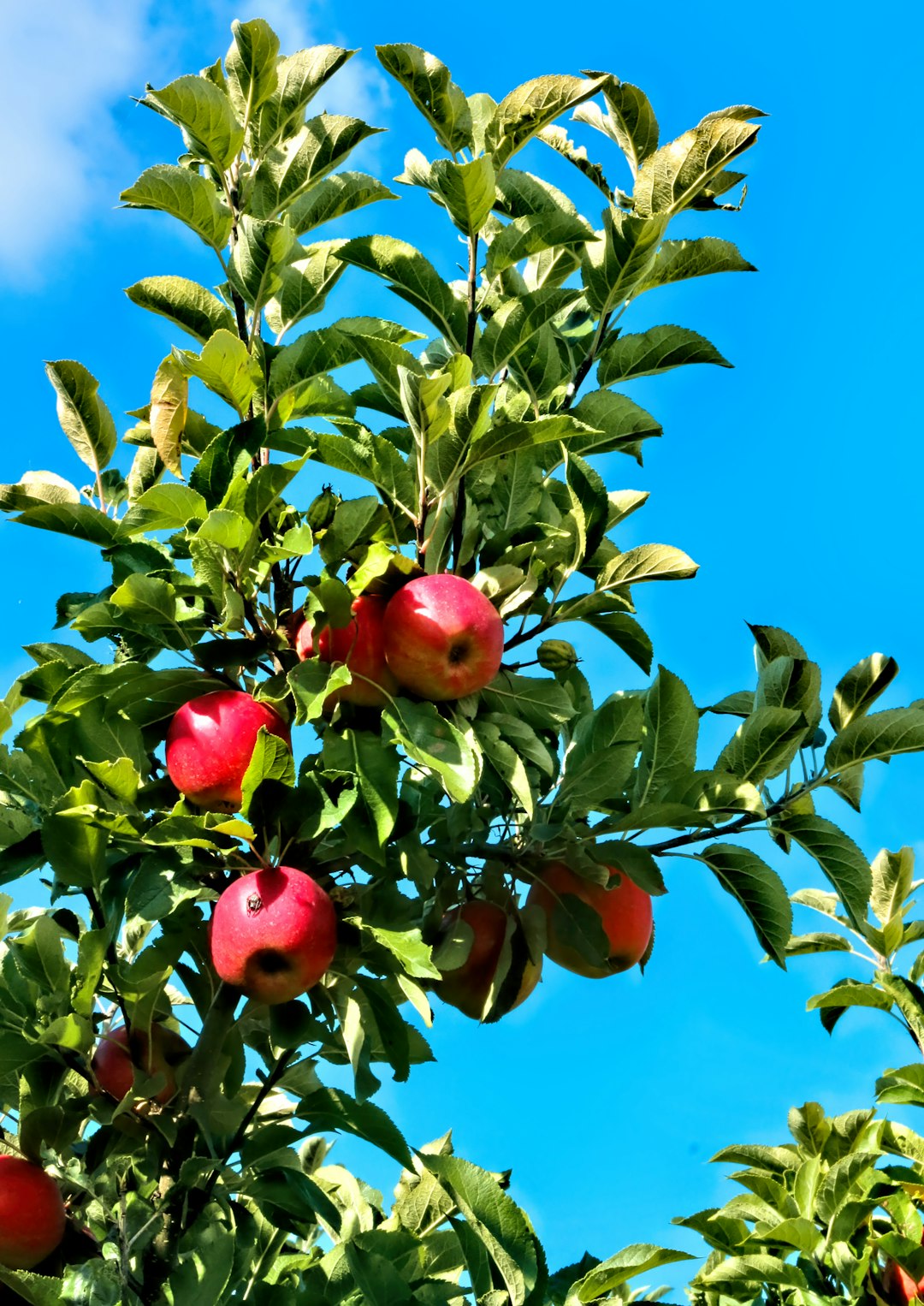
“An apple tree doesn’t eat its own apples.”
It’s such a simple idea that it almost sounds obvious at first. But the more I sat with it, the more it began to shift the way I think about making a difference in other people’s lives.
An apple tree spends years growing. It develops roots, weathers storms, survives difficult seasons, and slowly produces fruit that others eventually pick, eat, and share.
But the tree itself never tastes the apples. It simply grows them.
At first, the idea struck me as a clever metaphor, but the longer I thought about it, the more I realized how much it applies to the way we think about our impact on other people.
When we imagine making a difference in someone’s life, we tend to picture something visible. We imagine a moment where the outcome is clear and undeniable. Someone thanks us for changing their life. We see a person overcome a challenge because of something we did. The story has a beginning, a turning point, and a resolution that makes the impact easy to recognize.
Stories and movies tend to wrap transformation into clear moments of victory. In real life, growth is usually slower, messier, and far less visible.
Most of the ways people influence one another happen quietly, in moments that don’t feel dramatic or extraordinary at the time. A conversation that helps someone feel understood. A moment of patience when someone expects judgment. A piece of information that suddenly helps someone make sense of something they have been struggling with for years.
These moments rarely come with clear confirmation that they mattered. They simply happen, and life moves forward.
The truth is that many of the things that shape us as human beings are moments the other person probably forgot about shortly afterward. A teacher who took a little extra time to explain something. A friend who listened during a difficult moment. A comment that made someone feel seen in a way they hadn’t before.
I know this because there are small moments of kindness I still remember from years ago, moments that stayed with me long after they happened. The people who offered them likely have no idea how much those moments mattered or how deeply they stayed with me.
The impact often stays with the person who received the moment, even if the person who offered it has long since forgotten. For the person offering the kindness, it was simply an ordinary moment in the flow of their day.
The more I thought about that, the more it began to change the way I understood the question that had been sitting in the back of my mind since finishing the trauma education portal I spent months creating.
Am I actually making a difference?
For a long time, I think I have been looking for evidence that the answer was yes. Something visible, measurable, or concrete that would confirm the work mattered. But the apple tree metaphor suggests something different.
It suggests that the people who create something meaningful are not always the ones who experience its impact.
Someone might read something we wrote and finally find language for something they have been carrying alone. Someone might remember a conversation years later and realize it changed how they saw themselves. Someone might feel less alone simply because another person took the time to share their experience honestly.
Those moments can ripple outward in ways we may never witness. In that sense, much of the good we contribute to the world may exist outside of our awareness.
Just like the apples on a tree, the things we grow and offer to others may nourish people we never meet, in ways we never see.
Section 5: The Ripples We Can’t See
When I think about the question that started all of this, whether I am actually making a difference, I still catch myself drifting toward a familiar conclusion. I should probably be doing more.
It is easy to fall into the belief that making a difference requires building more resources, reaching more people, or creating bigger things. When the impact we hope to have is not clearly visible, the instinct is often to push harder and try to expand further.
The idea of the apple tree has slowly begun to challenge that way of thinking. I have created things intended to support others, including a trauma education portal designed to help people recognize patterns in their lives and find language for experiences they may have never fully understood.
I offer peer support and try to create spaces where people can show up as themselves without fear of judgment. Those efforts matter to me, but the difference we make in the world may not come primarily from the things we build.
Much of it comes from something quieter and far less visible, like how we treat ourselves while we are growing and healing, and in the way we treat other people when they are struggling.
It shows up in moments when someone chooses patience instead of frustration, curiosity instead of judgment, or kindness instead of anger. These choices rarely feel dramatic at the time, yet they ripple outward in ways we often never see.
A conversation that helps someone feel understood may influence how they treat the next person they encounter. A moment of compassion may soften a day that felt unbearable. The space someone creates for another person to be themselves can lessen the weight of shame they carry into the world. Most of these moments pass without any clear confirmation that they mattered, even though their effects may continue quietly long afterward.
The apple tree offers a simple way to think about this. A tree does not grow fruit so it can taste it. Producing apples is simply part of being an apple tree. Its role is to grow, survive the seasons, and continue becoming what it is meant to be.
In doing that, it naturally produces something that nourishes others. The tree does not measure how many apples are picked or who receives them. The fruit simply becomes available to anyone who might need it. Its purpose is fulfilled through the quiet act of continuing to grow.
Human lives can unfold in much the same way. A meaningful life is not always measured by visible outcomes or dramatic moments of change. Often it is reflected in the quieter ways someone chooses to live, continuing to grow, continuing to heal, and continuing to treat others with care and understanding.
The things we offer to the world are not only the things we build or create. Much of the impact we have comes simply from the way we live our lives: choosing to keep going when life is difficult, doing the work of healing and growing, sharing our stories honestly, and treating others with kindness.
The quiet act of surviving, evolving, and showing up as ourselves can influence people in ways we may never fully see. The ripples from those moments travel outward through other lives and other conversations, often long after the moment has passed. In that sense, the difference we make may exist in places we never witness, much like the apples on a tree.
────────────────────────
Thank you for taking the time to read this and reflect with me. If there is one thing I hope people take away, it is the reminder that they are far more capable than they often realize.
Every person carries the ability to influence the world around them in meaningful ways. Simply choosing to grow, to care for themselves, and to treat others with kindness creates ripples that extend far beyond what we can see. Each of us has the capacity to create change, not by becoming someone extraordinary, but by continuing to show up as our authentic selves with compassion, resilience, and care for the people around us.
────────────────────────
If something here resonated with you, you may also want to explore the Hellbloom Haven Trauma Portal, a free educational resource designed to help people better understand trauma, how it affects us, and tools that support healing and self-awareness.
Hellbloom Haven also offers:
• Come As You Are peer support sessions
• Elderly companion conversation sessions
• Intuitive readings and guidance
• Books, poetry, and creative healing tools




Leave a Reply