
When the Story Shifts: Seeing Childhood Through Adult Eyes
How growing up reveals the cracks in the memories we were told to believe
Wendi Kehn/Hellbloom Haven (Also featured on Substack & Medium)
Dec 22, 2025
Section 1: When the Memory Shifts
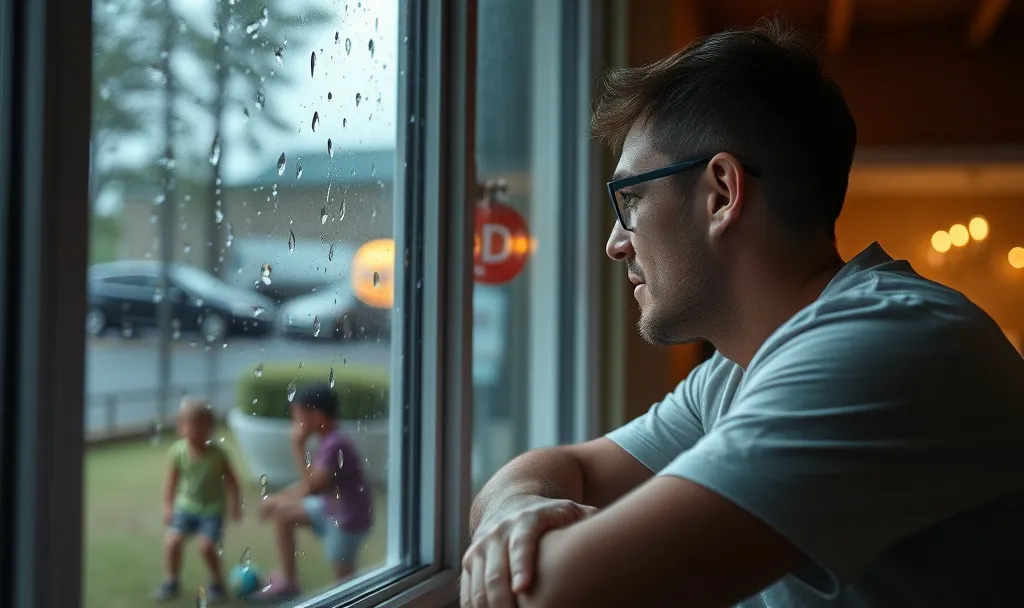
I was brushing my daughter’s hair when the memory came back.
My daughter sat in front of me, humming softly, swaying a little as I gently worked on braiding her hair before school, almost out of nowhere, came the thought:
There’s no way my sister could have done it.
The hair thing.
That strange little piece of family folklore I’d believed most of my life.
I was around ten or eleven. My hair was long, all the way down my back, and it made me feel beautiful, even during a childhood that often didn’t. One morning, I woke up and it was gone.
Not styled, not trimmed, hacked off. Uneven and laying in a pile next to me.
The story I was told, and the one I carried for decades, was that my 4-year-old sister had done it. That she was mad at me for not waking up to play Barbies in the middle of the night, so she snuck upstairs, into my room, and cut off all my hair while I slept.
And because I was a child, and adults insisted it was true, I believed it.
But that belief wasn’t just about trust.
It was also about emotion.
And if I’m honest, I think jealousy played a part too.
She was seven years younger than me, the baby. The only biological child between my mom and stepdad. She got the most attention, had the strongest bond with him, and rarely got in trouble for anything. She broke my things constantly, I remember one Christmas I got a guitar, and a week later, I found it smashed to pieces in the back of my closet. She threw a rock at my brother’s head once. She refused to listen, refused to follow rules, and yet when she acted out, I was the one who got in trouble.
I was the oldest. The built-in babysitter. The responsible one. The fixer. And over time, I started to carry the weight of the whole house on my back, while she, in my eyes, did whatever she wanted.
So when someone told me she cut off all my hair while I slept, I didn’t question it.
It fit the script I’d already come to accept: that she was wild and reckless and I was the one expected to hold it all together.
I didn’t stop to ask: Could she even reach the back of my head? Could she use scissors that way? Could she sneak upstairs without help?
I just said, yeah, that tracks.
And I believed it.
Until I didn’t.
Until I sat behind my daughter, brushing her hair, and suddenly realized:
None of it made sense.
And in that moment, it wasn’t just the memory that unraveled, it was the whole story around it.
Section 2: The Stories We’re Told, and Why We Believe Them
It’s easy, from the outside, to wonder how a person could believe a story that doesn’t quite add up. But when you grow up in a chaotic or emotionally unstable environment, questioning the story isn’t just difficult, it can feel dangerous.
As children, we don’t just absorb experiences, we absorb the interpretations of those experiences. The meanings assigned by the adults around us. The roles they put us in and the labels we didn’t ask for but were expected to wear.
In my family, I was the oldest of four. So I tried to become what was needed.
The responsible one, the entertainer, the comforting one, the helper, the quiet strength in the background.
But now, we get to ask: What do I need, now that I’m allowed to take up space?. I carried expectations that no one said out loud, but that I felt in every corner of the house. If my siblings acted out, I was supposed to fix it. If someone needed something, I was supposed to provide it. If something went wrong, I was supposed to take the blame, or at least not make things worse by needing attention or support.
My sister, on the other hand, was the youngest, the baby. She was my mom and stepdad’s only biological child, and she lived in a different emotional orbit than the rest of us. She was intense, explosive, unpredictable. She didn’t follow rules. She broke my things. She threw a rock at my brother once and split his head open. I got a guitar one Christmas, it was smashed in my closet a week later. She did what she wanted. Somehow, though, when she acted out, I was the one who ended up in trouble and getting punished for either not stopping her, or not being a good enough role model.
So when I was told she had cut off all my hair out of spite, I didn’t stop to think about whether that was physically possible. I didn’t ask how a 4-year-old who didn’t even sleep upstairs had managed to sneak into my room in the night and cut off waist-length hair while I slept.
Because in our family, logic didn’t matter as much as emotional patterns, and in that emotional pattern, it made perfect sense for her to do something wild and for me to be the one who had to live with the consequences.
That’s how childhood stories stick.
Not because they’re true, but because they make emotional sense.
When you grow up around trauma, the brain doesn’t always look for facts.
It looks for coherence and tries to make chaos feel predictable.
It tries to organize the pain.
So if someone tells you a story that fits your emotional experience, even if it contradicts reality, you believe it. You carry it, repeat it, and you build identity around it. You internalize blame or guilt or shame that doesn’t belong to you, because it was easier to believe the story than to question the system you were stuck inside.
And that’s what makes these realizations, years later, so disorienting.
Because now I’m looking back, and I don’t just see the flaw in the story,
I see the whole system that made the story believable.
Section 3: When the Narrative Cracks, and Something Truer Emerges
When a long-held story about your past breaks apart, it doesn’t just change your understanding of a memory, it shifts your relationship to yourself.
There’s the event itself, the memory, the imagery, the facts. But there’s also the story around it: the emotional logic you used to make sense of what happened, the roles people played, and the identity you constructed to survive it. When that story begins to unravel, even gently, it’s like pulling one thread that loosens the entire fabric.
For me, realizing my sister likely hadn’t cut my hair as a child wasn’t just about the haircut. It was about everything I had built around that belief:
The blame.
The resentment.
The narrative.
The subtle distance it created between us.
The grief I never fully named.
And the version of me that had to carry it all.
Because it was never just hair.
My hair was something I loved, long, beautiful, part of how I expressed myself, how I felt beautiful in a world that didn’t always feel safe. It was something I took care of. Something that belonged to me when very little else in my life did.
So waking up to it cut off wasn’t just shocking.
It felt violating.
I remember the pile of hair on the floor, thick and familiar and suddenly detached from me. I remember how disoriented I felt, how no one seemed to take it seriously. And I remember how I tried to reclaim it, spending months growing it back to my shoulders, only to have it happen again and still, no one was held accountable.
I was bullied for how I looked. I was called names. I felt ugly. And beneath the surface, something deeper happened, something I didn’t have the words for at the time:
I felt exposed.
I felt violated.
I felt ugly, and abandoned.
As a child who had already survived sexual abuse, this was not just a haircut. It was a repetition of a message I already knew too well:
Your body isn’t safe.
The things you love can be taken.
No one is coming to protect you.
Much like any family, we had our share of secrets and skeletons tucked away in our proverbial closets. Some were buried so deep they barely had shape; others lived just beneath the surface, half-acknowledged but never spoken aloud. We were raised not to talk about them, not because they weren’t real, but because silence kept things from unraveling.
So instead, we built stories.
Stories that explained the harm.
That preserved the image of safety.
That kept the peace by keeping the truth buried.
And when those stories start to crack, even slightly, the fallout is real.
Because you’re not just realizing a story was false.
You’re realizing what that story cost you.
That’s how childhood stories stick.
Not because they’re true, but because they make emotional sense.
And once you believe a story like that, especially as a child, it doesn’t just live in the past.
It shapes how you see everything else.
You begin to see people not as they are, but through the filter of that early experience. You read their actions through the lens of betrayal, abandonment, blame, or invisibility, depending on what you were taught to expect. You build your sense of self and others around those beliefs. You anticipate hurt. You normalize injustice. You act out of defense or hyper-independence or constant people-pleasing, not because you’re broken, but because the story made you believe that’s how you’d stay safe.
The story becomes a lens, a map, and a script.
You follow it for years, sometimes decades, without even realizing it was never yours to begin with.
No one tells you how disorienting it is, the space between clarity and healing.
The moment when your adult awareness finally sees what your child self couldn’t question.
The moment when your body says, “I remember what this cost me,” even if your mind is still catching up.
Two versions of the past begin to coexist:
The one you were given.
And the one that’s now emerging.
Both feel real and both shaped you.
And maybe, as you read this, you’re realizing you’ve had stories like that, too.
Things you were told about yourself, or someone else, that never sat quite right.
Stories that you carried because you had to, until you didn’t anymore.
If so, this part is for you.
Because when the story cracks and something truer emerges, you don’t just need answers,
You need support, space, and language for what comes next.
You need a way to hold that truth with both hands,
without dropping yourself in the process.
And that’s where we go from here.
Section 4: What We Do When the Story Changes
Living with the truth, holding the grief, and finding a way forward
When the story we’ve lived by starts to crack, it can leave us standing in unfamiliar emotional territory.
There’s no script for what happens next. No timeline or checklist that tells us when we should feel better or how quickly we should “move on.” There’s just the quiet, sometimes unsettling realization that something fundamental has shifted, and that we can’t unknow it.
One of the hardest parts of this stage is the pressure to do something with the truth right away. To make it neat, assign meaning, to forgive to confront, or to explain. But the truth is, when a story changes, the most important thing we can do at first is pause.
Because when a story shifts, it’s not just memory that changes, it’s our relationship to ourselves.
We start looking back at our lives through a new lens. We see the choices we made, the relationships we stayed in, the ways we adapted and protected ourselves, or tried to stay safe, all based on a version of reality we believed at the time. And that can bring up a complicated mix of emotions all at once.
There may be anger at the people who didn’t protect us.
Sadness for the parts of ourselves that carried blame or responsibility too early.
Confusion about what was real and what was distorted.
Grief for the years spent living inside a story that wasn’t fully true.
And woven through all of it, often quietly and persistently, is shame.
Shame often lingers in the aftermath, in the emotions we weren’t allowed to express, the thoughts we learned to hide, and the reactions that came without thinking.
It shows up in the ways we learned to cope when we had no better options, and in the beliefs we carried because they helped us feel safe, even if they weren’t true.
Shame can blur the lines between survival and failure.
It tells us our pain is proof we did something wrong, that our feelings were too big, our confusion made us weak, and the ways we coped weren’t just imperfect, but unforgivable.
But that isn’t the truth.
There’s nothing shameful about feeling deeply in places where it wasn’t safe to.
There isn’t anything shameful about adapting in ways that made sense when options were limited, or about holding beliefs that helped you survive, even if they don’t hold up now.
When we grow up inside a certain story, it does more than shape our memories; it shapes us.
It informs how we connect, what we fear, and what we tolerate.
It teaches us how visible we’re allowed to be, how quickly we should apologize, and how deeply we should doubt ourselves.
Even the choices we make, the risks we avoid, and the roles we play, aren’t random.
They’re reflections of what we once believed we had to do or beto belong, to stay safe, to be loved.
So when that information changes, it’s natural for everything else to feel unsettled.
This is often the most vulnerable part of the process, the space between knowing and integrating. The moment when the old story no longer fits, but the new one hasn’t fully taken shape yet. It can feel raw, destabilizing, and lonely, but it’s also deeply meaningful.
Because this is where healing actually begins.
Healing doesn’t demand that we rush into clarity.
It asks us to slow down and really listen to our bodies, our memories, and the parts of ourselves that have waited years to be heard.
It doesn’t require us to judge who we were back then.
Instead, it invites compassion for the version of us who did whatever it took to get through.
It’s not about rewriting the past to make it prettier.
It’s about honoring the truth of what happened, and finally giving ourselves permission to see it clearly.
Healing, in this stage, looks like noticing how old beliefs still show up in the present, in our relationships, our self-talk, our fear of being misunderstood, our tendency to shrink or overexplain. It looks like gently interrupting patterns that once kept us safe but now keep us stuck. It looks like relearning how to trust our own perceptions after years of doubting them.
And it looks like grieving, honestly and without apology, for what was lost, what was misunderstood, and what should never have been ours to carry.
There is no single right way forward. No perfect response. No timeline to follow.
But each time we choose to sit with the truth instead of rushing past it, each time we allow ourselves to feel without shaming the feeling, we begin to loosen the grip of the old story. We begin to create space for something new.
Something truer than what we were told.
A way of seeing ourselves with greater kindness.
And a story we can finally call our own.
Because when the story changes, we are not required to stay the same.
We get to decide what the next chapter looks like,
not by erasing the past,
but by no longer living under the weight of a story that was never ours to carry.
Section 5: When the Truth Finds You Later
A closing reflection
There’s something unsettling about realizing that a memory you’ve lived by, maybe even built part of your identity around, might not have happened the way you believed it did.
It’s not just about the event. It’s about everything that came after.
The emotions you carried and the beliefs you built.
The blame you assigned and the choices you made to protect yourself, or others, or some fragile version of the truth.
When the details shift, even just a little, it can send ripples through everything you thought you understood.
Suddenly, your past feels unfamiliar.
Your roles feel unclear.
And the person you were back then deserves to be re-met with compassion, now that the story is different.
This is the part no one prepares us for, not just learning the truth, but learning how to live with it.
It’s one thing to see it, it’s another to sit with what it means.
What shifts in who we blamed.
What softens in who we tried to protect and what becomes visible in how we’ve seen ourselves, especially if we’ve carried guilt, resentment, shame, or responsibility that was never truly ours to begin with.
When you grow up believing a certain version of events, whether you were taught it, told it, or pieced it together the only way you knew how, that story becomes more than just a memory.
It becomes a lens you see the world through and it shapes your relationships, influences your choices, and sets the tone for what you expect from love, justice, connection, and belonging.
So when that story begins to unravel, even quietly, even years later, it doesn’t just bring confusion.
It can feel like grief and betrayal and it often takes time to rebuild trust in your own perception again.
But here’s the most powerful part:
You’re allowed to look again, this time with adult eyes, not the ones that were just trying to survive.
To ask different questions, and relate to others and yourself, with more clarity and care.
You can reclaim the narrative from where it left you, and carry it forward in a way that finally honors what you lived through.
Not because you need to assign blame, but because you deserve to live in alignment with what’s real.
If that reality is still forming, if some parts are clear and others aren’t, that’s okay.
There is no deadline for understanding the past.
It’s enough to simply notice when a story changes.
And to treat yourself with gentleness while you learn how to live with what it means.
Maybe the real power isn’t in knowing everything for certain,
but in trusting that your perspective, your growth, and your truth still matter,
even when the story you started with no longer fits.
Thank you so much for reading.
If something in this story stirred something in you,
a memory, a grief, a shift in perspective,
know that it’s okay to pause here.
To sit with the truth, and let it settle.
We don’t always get to rewrite the stories we were given,
but we do get to decide how we carry them from here.
If you’re looking for company on that path, gentle, intuitive, real,
I’ve made a space for people like us.
The ones unlearning, rebuilding, softening back into their truth.
Explore the site to find my offerings, intuitive sessions, peer support, poetry, healing tools, workbooks, and more
You’re not too late to heal.
You’re not too far gone to come home to yourself.
And your story still matters.
With love and light,
Wendi Kehn
Discover more from Hellbloom Haven
Subscribe to get the latest posts sent to your email.

Leave a Reply