
On the Edge of Disappearance: Marking National Human Trafficking Awareness Day
An Invitation to Learn, Protect, and Stand with Survivors
Jan 11, 2026
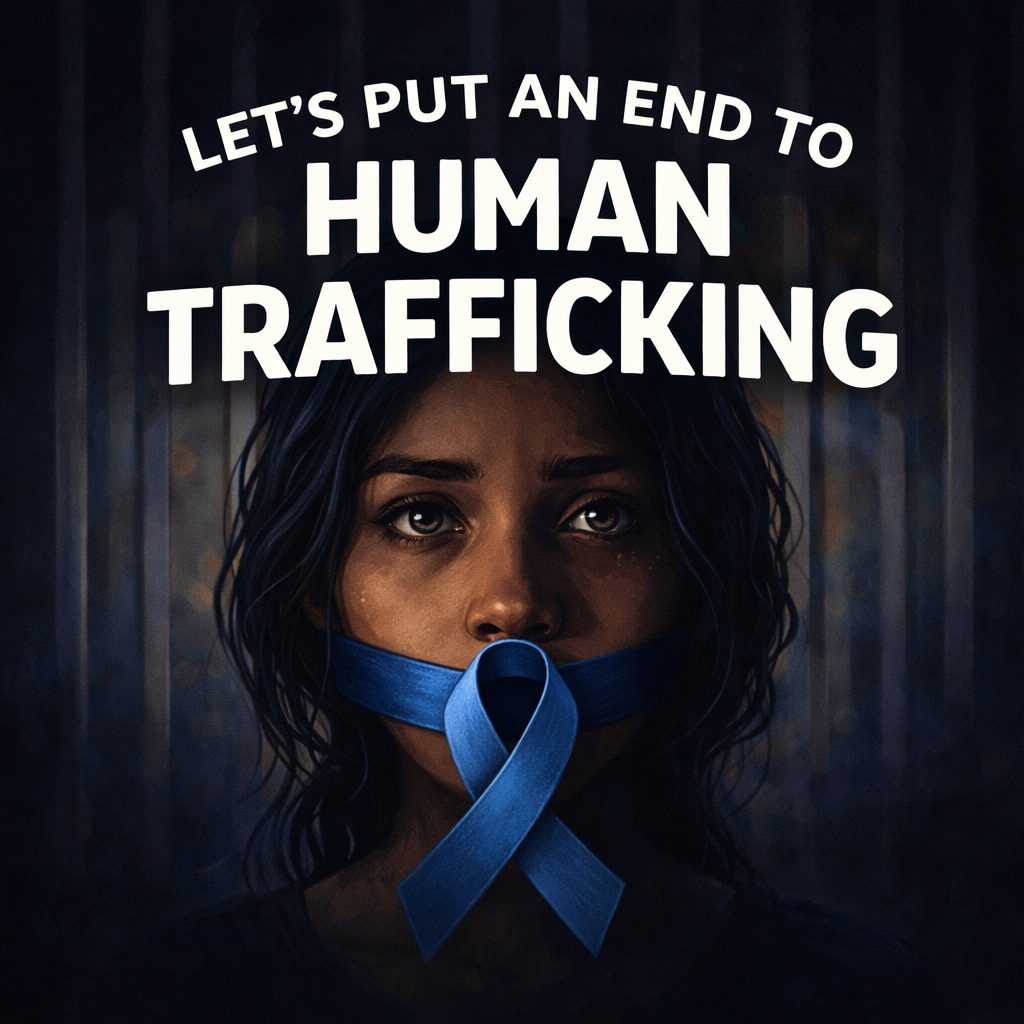
Today, January 11, 2026, Is National Human Trafficking Awareness Day
Today, January 11th, marks National Human Trafficking Awareness Day, a day set aside to recognize and confront one of the most pervasive human rights crises of our time. It is part of a broader effort throughout National Human Trafficking Prevention Month, aimed at raising awareness, supporting survivors, and mobilizing communities to prevent future exploitation.
Human trafficking is often misunderstood. Many people associate it only with dramatic abductions or distant international crimes. But in reality, trafficking takes many forms and happens much closer to home than most realize. It occurs in big cities and rural towns, in affluent areas and marginalized communities, and it disproportionately impacts those who are already vulnerable, including children, LGBTQ+ individuals, foster youth, migrants, and survivors of prior abuse.
While today’s awareness efforts highlight both labor trafficking and sex trafficking, it is especially important to understand how sexual violence, coercion, manipulation, and psychological grooming often overlap with trafficking dynamics. The line between surviving violence and being trafficked is, for many, perilously thin.
This day is not only about shining a light on injustice, it’s about standing with survivors, many of whom live in silence, fear, or are misjudged by the very systems meant to protect them. It’s about committing to education, prevention, and accountability, so fewer people fall through the cracks.
Section 1: What Human Trafficking Really Looks Like
Despite growing public awareness, many people still carry a rather narrow or sensationalized image of human trafficking. It’s often imagined as a violent kidnapping, a shadowy van, or a distant overseas crime ring.. Yes this happens as well, but the reality is far more complex, and far more common than many want to believe.
At its core, human trafficking is the exploitation of another person through force, fraud, or coercion for the purposes of commercial sex or labor. Legally, any involvement of a minor in a commercial sex act is automatically considered trafficking, even without the presence of force or coercion.
But most trafficking doesn’t look like a crime in progress. It doesn’t always involve physical violence or dramatic rescues. Often, it begins with what appears to be a relationship, a promise of love, opportunity, protection, or a fresh start. Traffickers often build trust slowly, grooming their victims over time before turning exploitative. This is especially true for children and teens who are already experiencing neglect, emotional abandonment, or instability. For those who are isolated or longing for safety, the offer of a place to stay or someone who “cares” can be deeply persuasive. Traffickers don’t always use force; they exploit what’s missing, and then demand sex, labor, or silence in return.
Once trust is broken and control takes hold, vulnerability becomes a trap. Individuals already dealing with poverty, family conflict, prior abuse, or housing insecurity are at higher risk of being drawn in, and kept in. Many are not physically restrained, but psychologically manipulated. Threats, guilt, shame, and emotional dependence are powerful tools used to maintain control. Some survivors are led to believe they’re choosing this life, that they owe a debt, that they’re being protected, or that there are no safer options. The heartbreaking truth is, sometimes they’re right, because too often, there truly aren’t safer options.
Crucially, traffickers are not always strangers. In fact, they are often family members, romantic partners, friends, or employers. This reality complicates how we identify and respond to trafficking. Survivors frequently report not understanding that what they were experiencing was trafficking, especially when there was no overt violence, or when the exchange of sex or labor was linked to survival needs.
Trafficking also frequently overlaps with other forms of violence and abuse. It can be intertwined with childhood sexual abuse, intimate partner violence, sexual assault, online exploitation, and emotional coercion. In many cases, the person being trafficked doesn’t see a clear boundary between one kind of violation and another, especially when they’ve endured chronic trauma or never had safe relationships to begin with.
For example, someone might be trafficked by their partner but never label themselves as a victim. Others may have escaped a harmful situation but continue to carry the weight of legal charges, stigma, or internalized shame connected to what they were forced to do.
This is why simplistic depictions of trafficking are harmful. When public understanding is shaped by dramatic or one-dimensional stories, we often ignore the quieter, more common realities, like the teenager exchanging sex for a warm place to sleep, the migrant worker enduring abusive labor conditions in silence, or the survivor who was arrested and criminalized rather than protected.
Awareness must come with accuracy. When we misunderstand how trafficking works, we misidentify who is at risk, overlook who is being harmed, and fail to provide survivors with the protection, support, and dignity they deserve. Preventing trafficking begins not just with awareness, but with understanding, and the willingness to see what we’ve been taught to overlook.
Section 2: When the Line Is Thinner Than It Seems
For some, human trafficking is a distant tragedy, just a headline, a documentary, or a story that happens somewhere and to someone else. But for many others, it brushes frighteningly close. Not everyone who is trafficked disappears in a van, and not everyone who survives a close call escapes without lasting impact.
I’ve never been trafficked, and I want to be clear about that. I have been targeted, pursued, harmed, and manipulated. I’ve experienced sexual violence as a child and adult, and I’ve lived through moments that, in hindsight, could easily have ended in disappearance or worse. Those experiences showed me just how thin the line can be between surviving a traumatic encounter and becoming part of a system of exploitation.
The first time, I was a young teen visiting a casino with a friend and her family. A group of men began following us, two young girls, they chased us into the women’s bathroom in a quieter part of the casino. We ran and locked ourselves in a stall. Security must have heard us, because they intervened and brought us back to our room. Later, we were told those men had been watching our door all night.
Another time, I was walking home alone after summer school when a white van pulled up beside me. The side door slid open, and someone tried to grab me. I threw my books at the men and ran. I had bruises on my hips for days.
The third time, I was older, standing outside a bar having a cigarette, when a stranger suddenly picked me up and began walking off with me. A friend of my ex’s stepped in, told him he couldn’t take me, and thankfully, the man let go.
Each of those moments was terrifying. And each time, it could have gone further. These weren’t misunderstandings or overreactions, they were real attempts to take me. I don’t know for sure what would’ve happened if I hadn’t gotten away. I only know that I did and that I am grateful. I know not everyone does.
Not all exploitation begin with a stranger or a van though. Sometimes, it starts with someone who seems safe.
When I was 16, I met a man in his early twenties. Life at home was difficult, and I didn’t have the language then for grooming or power imbalance. I just knew someone older was paying attention to me, and at the time, that felt like safety. By 17, I had moved in with him. By 18 I was pregnant and having my first baby. What followed wasn’t a relationship built on love or respect. It was control, isolation, emotional manipulation, and dependence. He made the decisions. I tried to leave after I had my daughter. He almost killed me.
That relationship didn’t involve trafficking, but it mirrored many of its tactics. It showed me how easily someone can be drawn into a situation where consent is blurred, where coercion is disguised as care, and where leaving feels like the most dangerous choice.
Those experiences helped me understand something I couldn’t have known then: trafficking often doesn’t begin with chains. It begins with vulnerability, and with someone who knows how to use it.
When we picture trafficking only in its most extreme or cinematic form, we overlook the thousands of people living dangerously close to it every day. We miss the teenagers being groomed by older partners. We miss those who disappear into coercive labor or sex economies. We miss the survivors who are criminalized instead of protected.
I’m not sharing these experiences to center myself, but to say: the line between being almost taken and being trafficked is not always dramatic. Sometimes it’s a slow erosion of boundaries. Sometimes it’s one person, one moment, or one missed opportunity to intervene.
That’s why awareness matters. Because the earlier we recognize the signs, the more chances we have to protect someone before they vanish into silence.
Section 3: Prevention Begins Before the Headlines
When most people think of prevention, they picture high-stakes rescues, hotline calls, or law enforcement operations. But by the time trafficking reaches that point, the system has already failed. Prevention doesn’t begin when someone is taken, it begins long before that, in the quiet moments when someone is vulnerable, overlooked, or misled.
Prevention is early recognition.
It’s understanding how grooming works, how predators build trust, how manipulation can feel like affection, and how quickly emotional dependency can become control. Prevention means teaching young people about boundaries, consent, and power dynamics, not just in romantic relationships, but in friendships, work, school, and family.
Prevention is community awareness.
It’s listening when someone says they’re scared, or when something feels off. It’s taking someone seriously when they say they don’t feel safe with a person others trust. It’s learning to ask better questions, not “Why didn’t you leave?” but “What made you feel like you couldn’t?”
Prevention is interrupting silence.
It means naming things for what they are, calling grooming grooming, coercion, and abuse, and not waiting for it to become criminal to intervene. It’s talking about trafficking in ways that are honest, age-appropriate, and stigma-free, especially in communities where conversations around sex, power, or violence are still taboo.
Sometimes, prevention comes down to one person, someone who notices, listens, and believes when no one else does. Even when systems fall short, individuals can still make the difference.
Prevention is believing survivors, including those who don’t use that word for themselves. It’s creating a culture where people feel safe coming forward, where their stories aren’t questioned or minimized, and where they’re not punished for what they did to survive.
The truth is, trafficking thrives in silence, stigma, and systems that don’t listen. Prevention begins when we start listening, not just to the most visible victims, but to the people who are close to the edge. Because that edge isn’t always obvious. And sometimes, all it takes to pull someone back is a moment of recognition, compassion, or safety.
What You Can Do
Learn to recognize the signs.
Trafficking doesn’t always look like a crime. Watch for people who seem unusually controlled, fearful, disconnected, or unable to explain injuries or absences. Notice sudden changes in relationships, behavior, or resources.
Create space for safe conversations.
You don’t have to be an expert to be someone’s lifeline. Just listening, without judgment, can open a door that someone desperately needs.
Take action, even small steps matter.
Support survivor-led organizations. Share accurate information. Challenge harmful myths. Learn how to respond if someone discloses harm. And speak up when something doesn’t feel right.
Learn the Signal for Help.
There’s a simple one-handed gesture that can be used to silently indicate distress or danger. It involves holding up your hand, tucking your thumb into your palm, and folding your fingers down over it. This signal has been used in situations of abuse, coercion, and even trafficking to ask for help without speaking. If someone uses it, check in safely and privately if you can.
Get educated.
There are free and accessible online courses that teach how trafficking works, and what to do when you see it. Organizations like the Blue Campaign, Polaris Project, Love146, and others offer training that anyone can take. These courses are trauma-informed and grounded in real-world prevention.
(I’ll include links to those resources at the bottom of this article.)
You don’t have to be in law enforcement or social work to make a difference. You just have to be willing to notice, willing to care, and willing to act.
Section 4: Supporting Survivors Means Changing the Way We Respond
Raising awareness is really only the beginning. If we want to stand with survivors of human trafficking, I mean really stand with them, we need to go beyond headlines, hashtags, and one-time acknowledgments. We have to examine how we respond when someone says, “This happened to me.”
For too many survivors, disclosure isn’t a moment of relief; it’s a risk. It’s a test of Will I be believed? Will I be blamed? Will I be criminalized for what I lived through?
And far too often, the answer is yes.
There are still survivors being arrested for what they were forced to do. Still people being turned away from services because they don’t fit the “right” narrative. There are still survivors being denied safe housing, losing custody of their children, or being judged for staying, for leaving, for not reporting, for not healing fast enough.
Supporting survivors means we change that.
It means listening even when the story is messy, nonlinear, or difficult to hear. It means dropping our expectations of how a survivor “should” behave, because survival doesn’t look the same for everyone.
It also means honoring autonomy. Survivors have already had their choices stripped away, by traffickers, by abuse, by systems that failed them. Real support starts with giving that choice back. Whether someone wants therapy or doesn’t, whether they speak out or stay silent, whether they use the word “survivor” or not, we respect that. We follow their lead.
When we talk about solutions, we have to stop speaking about survivors and start listening to them. Many of the most impactful anti-trafficking efforts in the world are being led by people who’ve lived it, people who understand not just the trauma, but the systems around it. They’re building shelters, writing laws, educating professionals, and advocating for justice that goes deeper than punishment.
Supporting survivors also means expanding our definition of who they are. Not all survivors are young, cis, straight, or visibly distressed. Some are still in survival mode. Some are working in the sex trade. Some are trans. Some have been criminalized. If our compassion only extends to people who meet a certain standard of “innocence,” then it’s not really compassion, it’s performance.
The truth is, healing is slow. It’s uneven. It can take years for someone to even name or accept what happened to them and sometimes, just being believed, by one person, is the first step toward that.
So support doesn’t always have to be grand. Sometimes it looks like saying, “I believe you.” Or “You didn’t deserve that.” Or “You get to heal in your own time.”
And sometimes, it looks like being the person who doesn’t flinch when someone tells the truth.
Because at the end of the day, standing with survivors is not about saving anyone. It’s about showing up, staying curious, and making room for the truth, even when it’s uncomfortable, especially when it is, because that discomfort is often what keeps people silent, dismissive, or looking the other way. Trafficking thrives in that silence. Survivors are failed in that silence. And change begins when we’re willing to sit with hard truths and still choose to care.
It’s about making sure that no one else has to survive in silence.
Closing: From Awareness to Action
There’s a reason we pause on days like this, not just to talk about trafficking, but to remember what’s at stake. The truth is, so many people don’t make it back. And for the ones who do, survival doesn’t mean the story is over. It means living with the long-term impact of trauma, often in a world that still doesn’t fully understand what they’ve survived.
Trauma doesn’t simply disappear once someone is out of exploitation, it often lingers, shaping how survivors think, feel, and move through the world around them.
According to a 2018 study published in Cognitive Behaviour Therapy, 61% of trafficking survivors met diagnostic criteria for PTSD, and 71% met criteria for depression, significantly higher than in the general population. Another international review found that approximately 41% of survivors develop complex PTSD (C‑PTSD), which affects emotional regulation, self-worth, and the ability to form safe relationships. And according to the survivor advocacy organization The Exodus Road, the vast majority of trafficking survivors live with at least one trauma-related mental health condition, often long after the trafficking itself has ended.
These numbers aren’t just data points, they reflect the lived realities of people who have been coerced, manipulated, and broken down over time. Many survivors struggle not because they’re failing to heal, but because the systems around them were never built to hold this kind of pain, or this kind of history.
To any survivors reading this, your story matters, you matter, and I am so sorry your history is filled with so much pain.
Whether you’ve shared it or kept it private, whether you’re healing or still surviving, whether you use the word “survivor” or you’re still figuring out what happened to you, your experience is valid. You are not alone. You owe no one your story. But if you ever choose to tell it, even in a small way, you might become someone else’s lifeline.
Sometimes the most powerful thing in the world is hearing someone say, “Me too. I’ve been there. You can survive this.”
Whether you speak your truth or carry it quietly, you deserve safety. You deserve support. You deserve to heal on your own terms.
To the rest of us: we have to do better. We have to believe people the first time. We have to challenge the narratives that silence them. And we have to fight not only to prevent trafficking, but to build a world that doesn’t abandon people after it ends.
Because awareness alone is not enough. Not if it doesn’t lead to action. Not if it doesn’t lead to care.
Let this not be the end of your awareness, but the beginning of your action.
Learn more. Talk to others. Challenge what you think you know. Support survivors, in the ways they ask to be supported. Above all, remember: trafficking doesn’t just happen in shadows. It happens in plain sight.
And we all have a role to play in ending it.
With Love,
Wendi Kehn
A Personal Note + Offerings
If you’ve made it to the end of this piece, thank you. Writing it was personal, emotional, and deeply important. And I want you to know that if this stirred something in you, you’re not alone.
In addition to writing and advocacy, I offer a variety of resources designed to support healing, reflection, and connection, including:
- Peer support sessions (non-therapy, non-clinical)
- Trauma-informed workbooks
- Poetry and prose collections
- Healing-focused digital downloads
- Intuitive services
- Empowering apparel and creative offerings
A special note about my peer support sessions:
These are not therapy, and I don’t act as a mental health advocate or licensed clinician. What I offer is a safe, judgment-free space, I can carry heavy topics, especially for those who need to speak freely without worrying about shocking someone or being misunderstood.
If you need a place to vent, reflect, cry, or just feel seen, I’m here to hold space for you, gently, honestly, and without pressure to perform or fix anything.
Sometimes, just being heard by someone who understands can be a powerful part of healing.
You can explore my offerings and connect with me directly at:
🌿 www.hellbloomhaven.com
Wherever you are in your journey, I hope this piece reminded you:
You are not alone.
Your story matters.
And healing is possible
Resources for Learning, Support, and Action
🛡️ Education + Prevention
1. DHS Blue Campaign (U.S. Department of Homeland Security)
Free public awareness materials and online trainings on how to recognize and respond to human trafficking.
🔗 https://www.dhs.gov/blue-campaign
2. Polaris Project
A national anti-trafficking organization offering survivor-centered resources, training, and the National Human Trafficking Hotline.
🔗https://polarisproject.org/
3. Love146
Nonprofit focused on the prevention of child trafficking and exploitation. Offers school-based education programs and survivor care.
🔗
4. The Exodus Road
Global nonprofit focused on combating human trafficking through training, support for law enforcement, survivor aftercare, and advocacy.
🔗
📞 If You or Someone You Know Needs Help (U.S.)
National Human Trafficking Hotline (Polaris)
📱 1-888-373-7888
📲 Text “BEFREE” (233733)
🔗
https://humantraffickinghotline.org
Discover more from Hellbloom Haven
Subscribe to get the latest posts sent to your email.

Leave a Reply